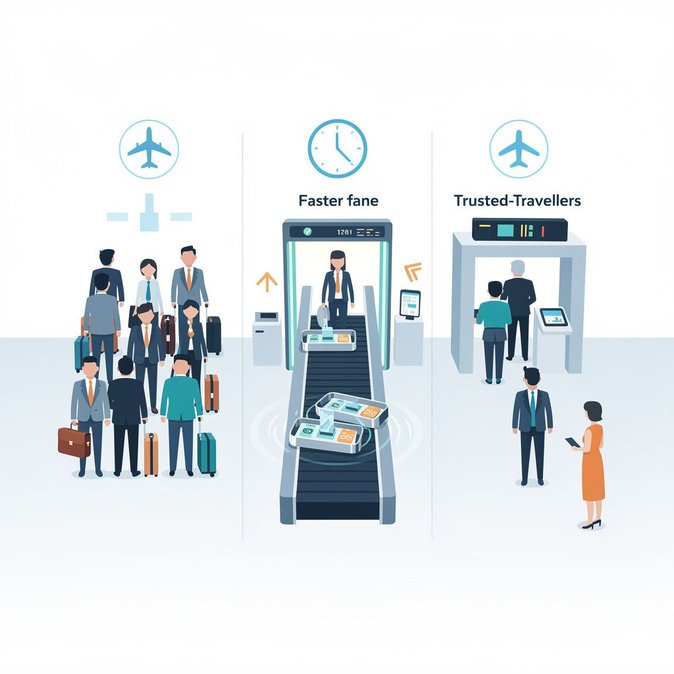
Union Home Minister Amit Shah chaired a high-level review in New Delhi on 9 July aimed at unclogging India’s busiest airports before the winter rush. The meeting gathered senior officials from the Home and Civil Aviation ministries, CISF, Bureau of Immigration and Airports Authority of India. Shah set a two-year deadline to complete 62 infrastructure projects, many of which directly affect immigration throughput. Key directives include phased installation of Automatic Tray Retrieval Systems (ATRS) at all category-A terminals, expansion of self-service bag-drop counters and a new formula linking aerobridge capacity to peak-hour passenger flows.
For travelers looking to stay ahead of these adjustments, VisaHQ can simplify the paperwork behind every international trip. Its India portal lets passengers verify visa requirements in seconds, complete e-visa or traditional applications online, and receive real-time status updates—freeing them to breeze through new fast-track lanes once they arrive.
On the immigration side, Shah ordered every state capital to host a functional Foreigners Regional Registration Office (FRRO) by 2027 and fast-tracked approval for new immigration checkpoints at Agartala and the forthcoming Noida Jewar hub. Perhaps most relevant for frequent flyers is the mandate to grow enrolment in the Fast-Track Immigration – Trusted Travellers Programme (FTI-TTP). Airlines have been asked to push WhatsApp invites to all international ticket holders, while the Bureau of Immigration will add on-arrival kiosks for last-minute registration. The programme, India’s answer to Global Entry, currently has only 180,000 members—well below the 1 million target set for 2027. Industry stakeholders welcomed the moves but cautioned that manpower, not hardware, remains the bottleneck. “ATRS matters little if there aren’t enough CISF screeners,” said a senior operations manager at Delhi Airport. The Home Minister addressed this by insisting educational standards for X-ray operators remain intact even as recruitment accelerates. Corporate mobility teams should monitor rollout schedules city by city. Early adopters of FTI-TTP will save 10-15 minutes per arrival, which can materially improve duty-of-care compliance when crews land during curfew windows. Travel managers are also advised to flag possible construction-related gate changes over the next 24 months as terminals retrofit security zones.
For travelers looking to stay ahead of these adjustments, VisaHQ can simplify the paperwork behind every international trip. Its India portal lets passengers verify visa requirements in seconds, complete e-visa or traditional applications online, and receive real-time status updates—freeing them to breeze through new fast-track lanes once they arrive.
On the immigration side, Shah ordered every state capital to host a functional Foreigners Regional Registration Office (FRRO) by 2027 and fast-tracked approval for new immigration checkpoints at Agartala and the forthcoming Noida Jewar hub. Perhaps most relevant for frequent flyers is the mandate to grow enrolment in the Fast-Track Immigration – Trusted Travellers Programme (FTI-TTP). Airlines have been asked to push WhatsApp invites to all international ticket holders, while the Bureau of Immigration will add on-arrival kiosks for last-minute registration. The programme, India’s answer to Global Entry, currently has only 180,000 members—well below the 1 million target set for 2027. Industry stakeholders welcomed the moves but cautioned that manpower, not hardware, remains the bottleneck. “ATRS matters little if there aren’t enough CISF screeners,” said a senior operations manager at Delhi Airport. The Home Minister addressed this by insisting educational standards for X-ray operators remain intact even as recruitment accelerates. Corporate mobility teams should monitor rollout schedules city by city. Early adopters of FTI-TTP will save 10-15 minutes per arrival, which can materially improve duty-of-care compliance when crews land during curfew windows. Travel managers are also advised to flag possible construction-related gate changes over the next 24 months as terminals retrofit security zones.