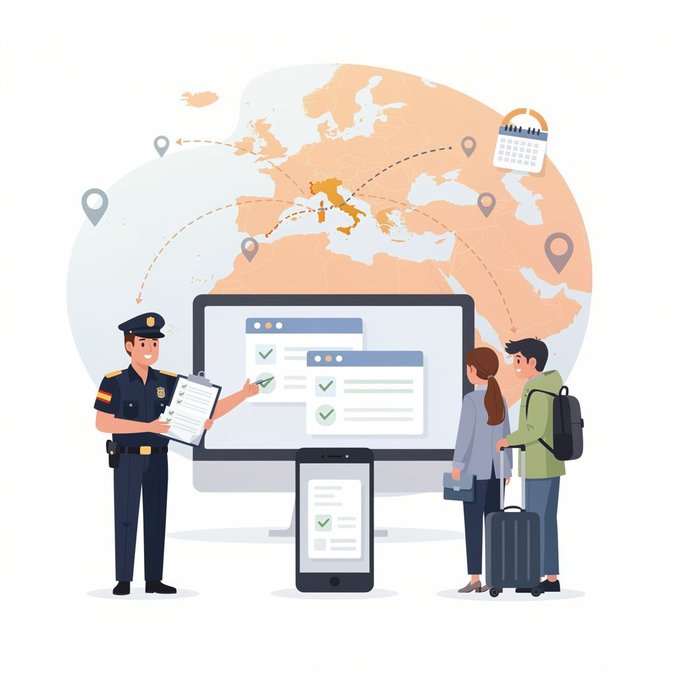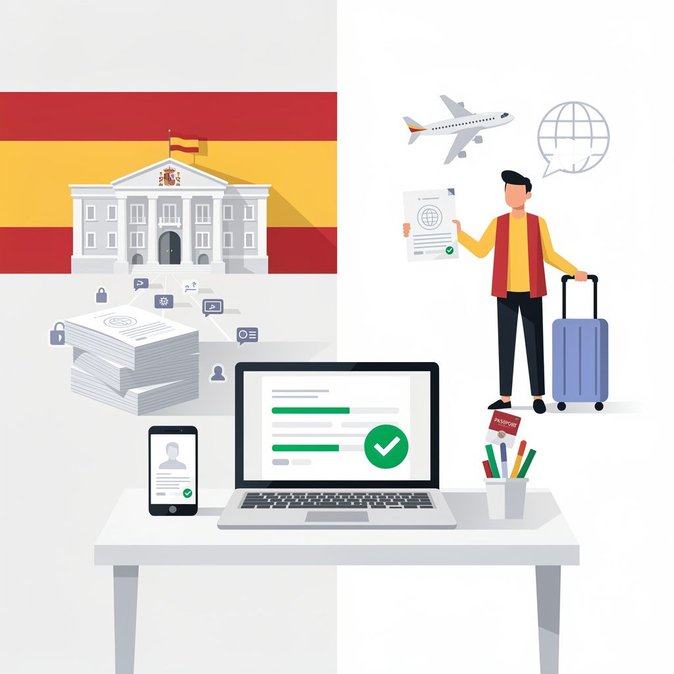
Effective 11 July, Spain’s National Police (Dirección General de la Policía) has overhauled the ‘carta de invitación’ system used by residents to invite non-EU nationals for short stays. The online portal now allows applicants to upload supporting documents, pay the €75 fee electronically and track the file in real time, replacing the paper-only procedure that required multiple visits to local police stations.
For travellers who prefer expert assistance, VisaHQ can manage the carta de invitación process end-to-end, bundle it with any necessary Schengen visa services and arrange secure delivery of the stamped letter. Their dedicated Spain page provides clear checklists, live chat support and status tracking, giving families, business hosts and HR teams an efficient alternative to navigating the new portal alone.
The invitation letter is critical for relatives and business guests from visa-waiver countries who plan to stay in a private home rather than in a hotel. Border agents frequently request the original document to prove accommodation and financial means. According to the Police, more than 220,000 invitation letters were issued in 2025; digitisation is expected to cut processing times from three weeks to five working days and reduce errors caused by illegible handwriting. For employers, the change simplifies compliance when hosting colleagues from Latin America or the United States for short-term projects. HR managers can now initiate an application centrally and assign digital signatures to Spanish staff hosting the visitor. The portal also integrates with Spain’s Cl@ve system, meaning that companies already registered for other government services need no additional credentials. Travellers should still carry the original, police-stamped letter—now printed with a QR code linking to the electronic record—when entering the Schengen area. Failure to present the document can still result in denial of entry, so companies are advised to courier the letter well in advance or have the host meet the guest at the airport. The reform is part of a broader push to modernise extranjería procedures before Spain rolls out the EU Entry/Exit System in October 2026. Further updates, including English-language interfaces and integration with Spain’s digital nomad visa platform, are scheduled for later this year.

For travellers who prefer expert assistance, VisaHQ can manage the carta de invitación process end-to-end, bundle it with any necessary Schengen visa services and arrange secure delivery of the stamped letter. Their dedicated Spain page provides clear checklists, live chat support and status tracking, giving families, business hosts and HR teams an efficient alternative to navigating the new portal alone.
The invitation letter is critical for relatives and business guests from visa-waiver countries who plan to stay in a private home rather than in a hotel. Border agents frequently request the original document to prove accommodation and financial means. According to the Police, more than 220,000 invitation letters were issued in 2025; digitisation is expected to cut processing times from three weeks to five working days and reduce errors caused by illegible handwriting. For employers, the change simplifies compliance when hosting colleagues from Latin America or the United States for short-term projects. HR managers can now initiate an application centrally and assign digital signatures to Spanish staff hosting the visitor. The portal also integrates with Spain’s Cl@ve system, meaning that companies already registered for other government services need no additional credentials. Travellers should still carry the original, police-stamped letter—now printed with a QR code linking to the electronic record—when entering the Schengen area. Failure to present the document can still result in denial of entry, so companies are advised to courier the letter well in advance or have the host meet the guest at the airport. The reform is part of a broader push to modernise extranjería procedures before Spain rolls out the EU Entry/Exit System in October 2026. Further updates, including English-language interfaces and integration with Spain’s digital nomad visa platform, are scheduled for later this year.