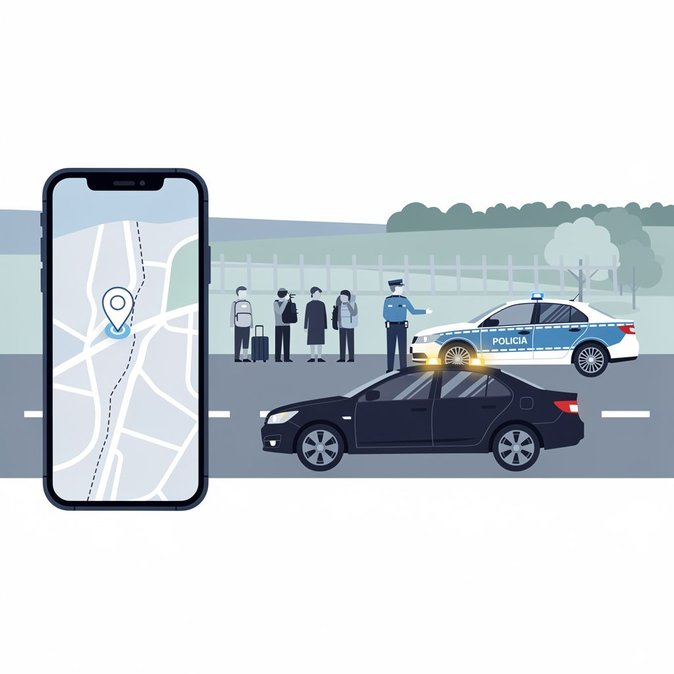
Police in Hajnówka, north-eastern Poland, detained a 29-year-old Ukrainian national on 13 July 2026 after locals reported suspicious activity near the village of Chytra. According to the official police statement, the man had driven a Volkswagen with Mazovian plates to pick up four Afghans and one Pakistani who had just crossed the Belarusian border illegally. Acting on the tip-off, patrol officers intercepted the vehicle and—together with Straż Graniczna—located the five migrants hiding in a roadside ditch. All six individuals were handed over to border-guard custody. The driver faces up to eight years’ imprisonment for facilitating unauthorised entry under Article 264 of Poland’s Penal Code. The arrest illustrates a growing modus operandi in which smugglers use ride-hailing apps and drop-pin GPS coordinates to collect migrants inside Polish territory, reducing their exposure to Belarusian guards and surveillance cameras along the border wall. Polish law-enforcement agencies have stepped up mixed patrols and licence-plate monitoring to disrupt these “courier” pickups. Corporate fleet operators in Podlaskie and Lubelskie regions should expect more roadside checks targeting vans and passenger cars with out-of-area registrations. HR departments employing Ukrainian nationals on cross-border shifts must remind staff to carry valid residence documents to avoid unwarranted suspicion during sweeps. For global-mobility managers, the incident underscores Poland’s tough stance on secondary migration through its territory. Companies that rely on third-party transport providers should audit compliance with driver vetting and route-planning protocols to ensure they are not inadvertently linked to smuggling networks.
Source: Policja.pl