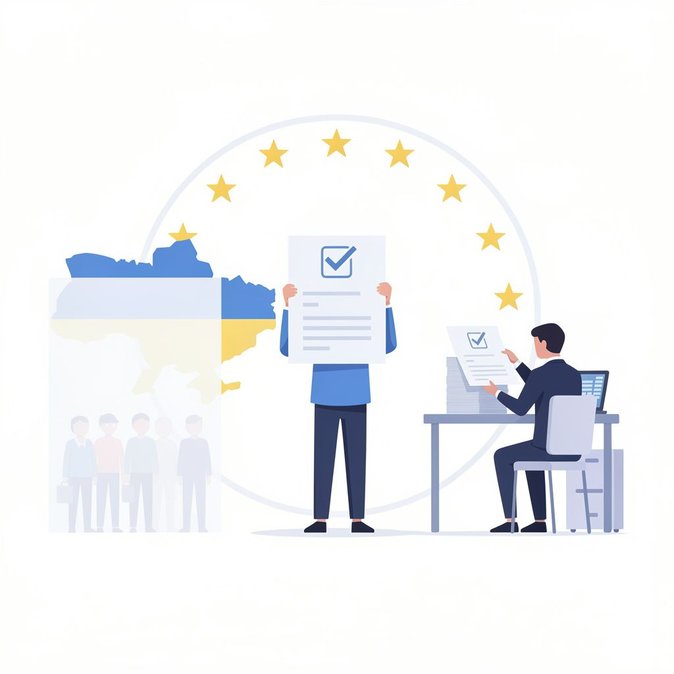
The Polish daily “Rzeczpospolita” revealed on 13 July 2026 that Brussels and national capitals have agreed in principle to tighten the entry rules for people fleeing Russia’s war on Ukraine. Under the forthcoming revision of the EU Temporary-Protection Directive, new applicants will have to present a Ukrainian government certificate confirming that they are not currently subject to military mobilisation. Warsaw’s deputy interior minister, Prof. Maciej Duszczyk, told the paper that legislative drafting in Brussels is "almost complete" and that Poland supports the change. The measure is meant to stop draft-eligible Ukrainians—especially men aged 18-60 but also certain categories of women with medical or military specialisms—from leaving the country only to claim protection and social benefits in the EU. According to Eurostat, Poland hosts roughly 960,000 Ukrainians with temporary-protection status, of whom more than 218,000 are men of mobilisation age. Polish authorities say the new EU-level rule will apply only to fresh arrivals, not to those who already hold valid residence documents. For businesses, the requirement could complicate cross-border staffing plans that rely on short-notice transfers of Ukrainian talent to Polish production sites or shared-services centres. Employers will need to check that prospective hires possess the new exemption document before sponsoring accommodation or onboarding. Immigration advisers warn that double due-diligence will be essential because forged certificates are likely to appear on the black market. The policy also has humanitarian and geopolitical ramifications. Kyiv is under intense pressure to replenish its armed forces after more than four years of full-scale war, while EU member states face voter fatigue over refugee spending. By linking protection status to mobilisation rules, Brussels hopes to balance solidarity with Ukraine and domestic political concerns about security and labour-market impacts. Practically, the change means that visa-free entry alone will no longer suffice for Ukrainians wishing to settle in Poland: they will need (1) a biometric passport, (2) the new mobilisation-exemption certificate, and (3) proof of accommodation within 120 days of arrival. Companies should update their mobility checklists, and HR teams should brief recruiters in Ukraine on the forthcoming documentation standard, expected to come into force in late July and to be fully operational EU-wide by March 2027.
Source: Rzeczpospolita