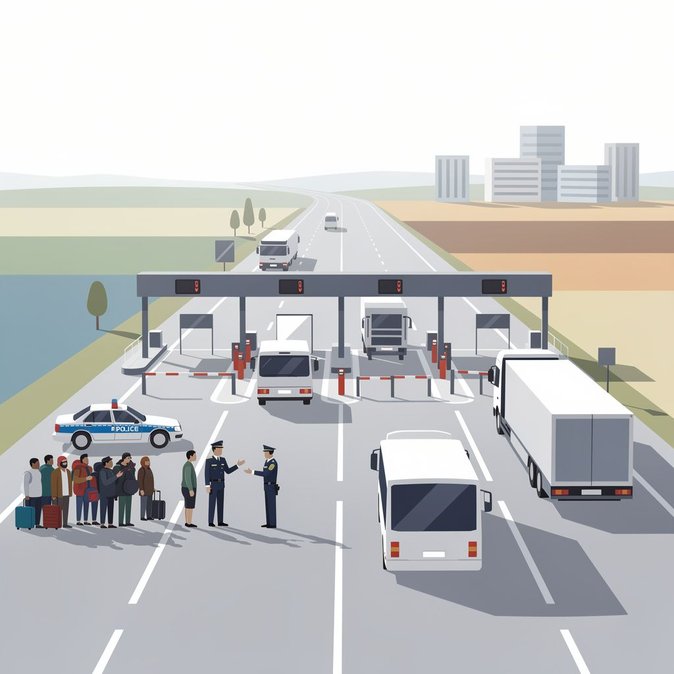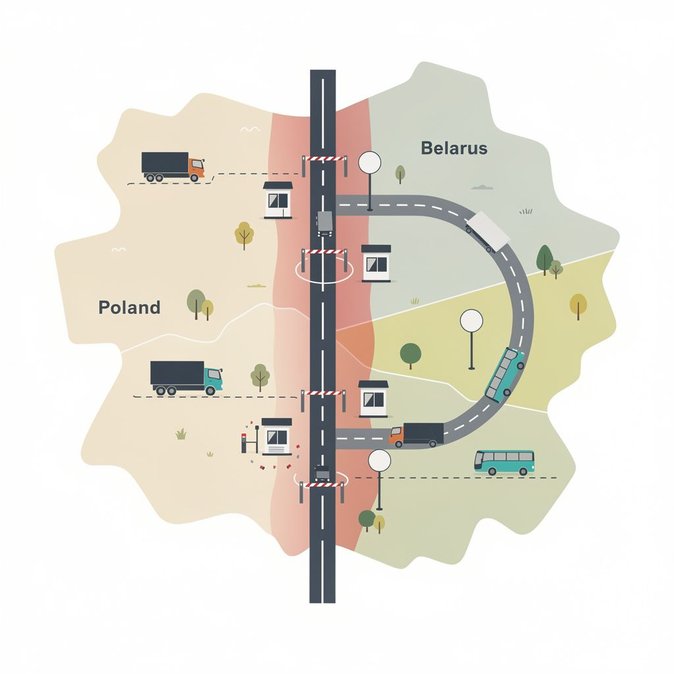
Real-time notices on the official granica.gov.pl portal confirmed on the evening of 13 July 2026 that border traffic remains suspended at the Połowce and Sławatycze road crossings on the Polish-Belarusian frontier. The two posts—vital for local trade in Podlaskie and Lubelskie voivodeships—were first closed in March 2026 when the government expanded a 200-metre buffer zone to deter organised attempts to breach the fence erected in 2022. Under the current regime, only the international crossings at Kuźnica, Terespol and Koroszczyn/Kukuryki handle passenger and cargo flows. The Border Guard notes that wait times for freight at Kuźnica averaged zero hours on 13 July thanks to lighter volumes and the mandatory pre-booking system for TIR trucks; private cars faced delays of up to two hours. Bus operators running labour-migration shuttles for Belarusian IT specialists and construction workers must reroute via Terespol, adding roughly 120 kilometres and EUR 60 in extra fuel per round trip. Poland’s Internal Affairs Ministry says the closures have helped drive a 98 percent year-on-year drop in illegal crossings—only 215 attempts were recorded between January and May 2026 compared with over 10,600 in the same 2025 period. Business groups, however, are lobbying for an exceptions regime that would allow vetted Belarusian service technicians to enter through Połowce to support machinery installed at Polish plants near Białystok and Hajnówka. For global-mobility managers, the practical takeaway is that foreign assignees commuting between Minsk and eastern Poland should plan itineraries through Brest–Terespol rail or the Koroszczyn freight terminal until at least Q4 2026. Employers must also remind non-EU travellers that entry at closed crossings is a criminal offence subject to deportation and a five-year Schengen ban. Analysts expect Warsaw to link any reopening to Minsk’s willingness to dismantle state-sponsored smuggling networks—a condition Belarus has so far rejected. Companies with exposure to the corridor are advised to map contingency supply chains and monitor daily updates via the granica.gov.pl API.
Source: granica.gov.pl