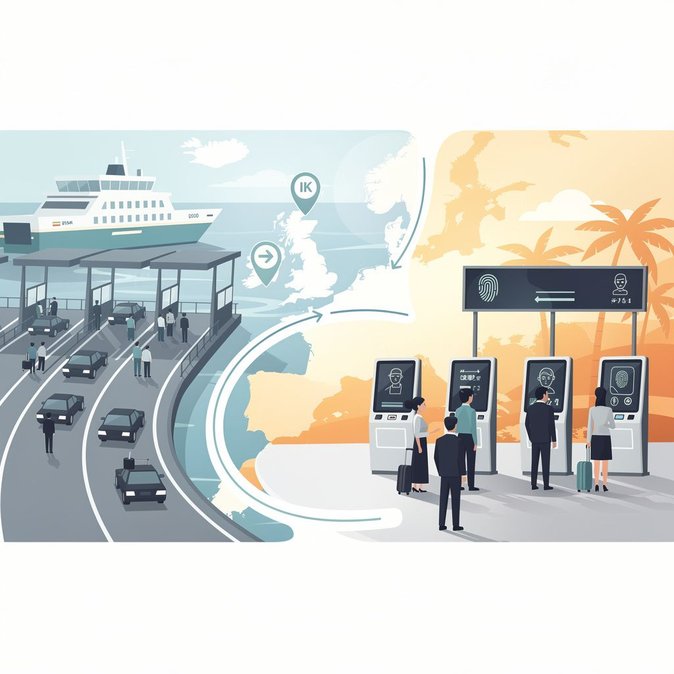
UK Transport Secretary Heidi Alexander spoke with EU Transport Commissioner Apostolos Tzitzikostas on 13 July, and the UK Government released details on 14 July, confirming joint efforts to ensure smooth implementation of the EU Entry/Exit System (EES) during the busy summer-autumn holiday window. Under EES, non-EU travellers must submit fingerprints and a facial image the first time they cross into Schengen, a process that has raised fears of long queues at Dover and French ports. Spain—Britain’s top holiday and second-largest business-travel destination—will be among the Schengen countries processing the highest volume of UK nationals. According to Aena, UK passengers already exceed pre-pandemic levels at Málaga and Alicante airports. Spanish border police have installed 200 additional biometric kiosks at Madrid-Barajas and Barcelona-El Prat and will deploy roving officers at peak arrival banks between 25 July and 4 September. The UK Department for Transport has earmarked £20 million to expand passport-control booths at Dover and has shared real-time queue data with Spanish authorities to stagger charter-flight departures. Airlines will start pre-registering frequent flyers on Madrid-bound flights from London-Heathrow to reduce first-time enrolment times. Practical implications: Duty-of-care teams should warn travellers to allow an extra 30 minutes for first entry into Spain under EES and to retain their receipt for exit scanning. Mobile-workforce programmes should build EES time into layovers when routing via Schengen hubs. While Spain’s e-gate capacity has increased, secondary airports such as Valencia may still rely on manual booths, making connection times tighter.