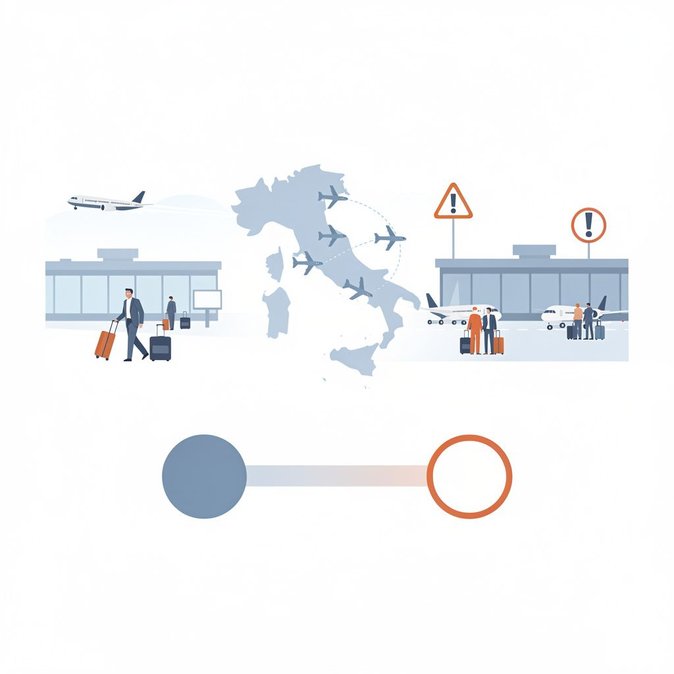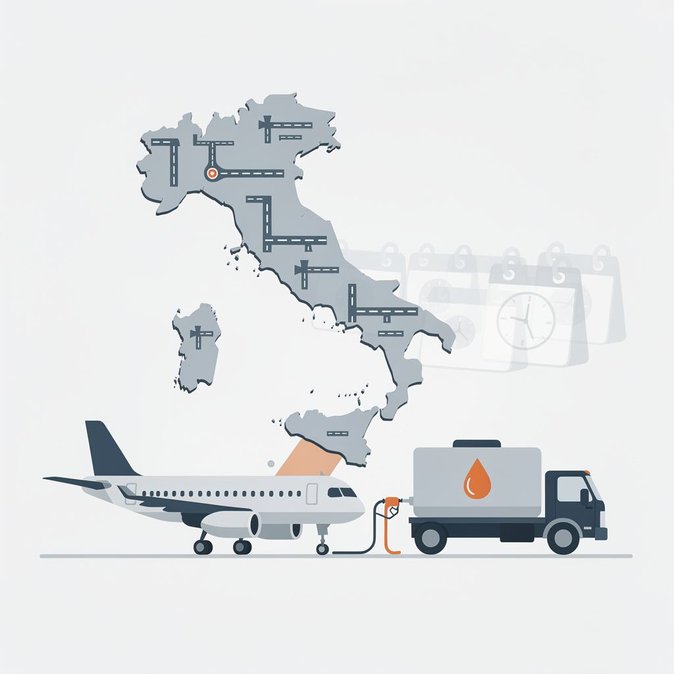
Several Italian airports entered contingency mode early on 14 July after a tanker carrying jet-fuel for Air BP failed to dock on schedule at the port of Trieste. According to Euronews, the state-owned ENAC and operators at Bologna, Venice and Verona issued joint notices warning carriers that uplifts could be capped at 2,000 litres per departure and that flights longer than three hours might need technical stops or tanker‐in refuelling. The shortage comes at the height of the northern-hemisphere business-travel season and just as Italian hubs are seeing record post-pandemic traffic. Airlines that rely on “tankering” – loading extra fuel in Italy for the return leg – have been asked to arrive “tanks-full”, while charter operators have been urged to consider alternative airports such as Bergamo or Rimini that are supplied by different fuel farms. Industry analysts note that a single day of rationing can cascade through European networks because aircraft scheduled for U.S. or Middle-East rotations typically depart Italy with full payloads and minimum contingency fuel. If the tanker is further delayed, carriers may have to offload cargo or passengers, increasing costs and potentially triggering EU261 compensation claims. For mobility managers the immediate advice is to monitor NOTAMs and keep travellers on flexible tickets. Companies shipping high-value cargo via belly-hold should also build in extra lead time until the logistic chain stabilises. ENAC says normal supplies are expected to resume “no later than the night of 16 July”, but warns the notice could be extended depending on sea conditions in the Adriatic.
Source: Euronews