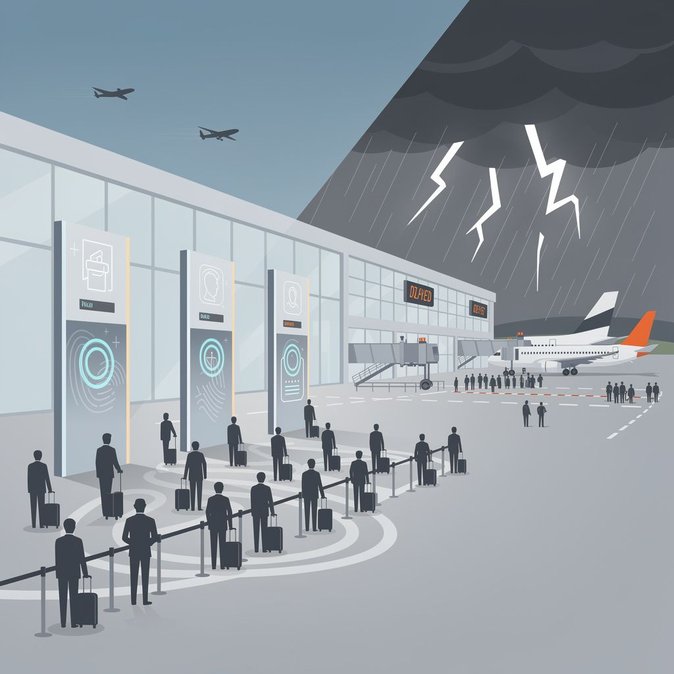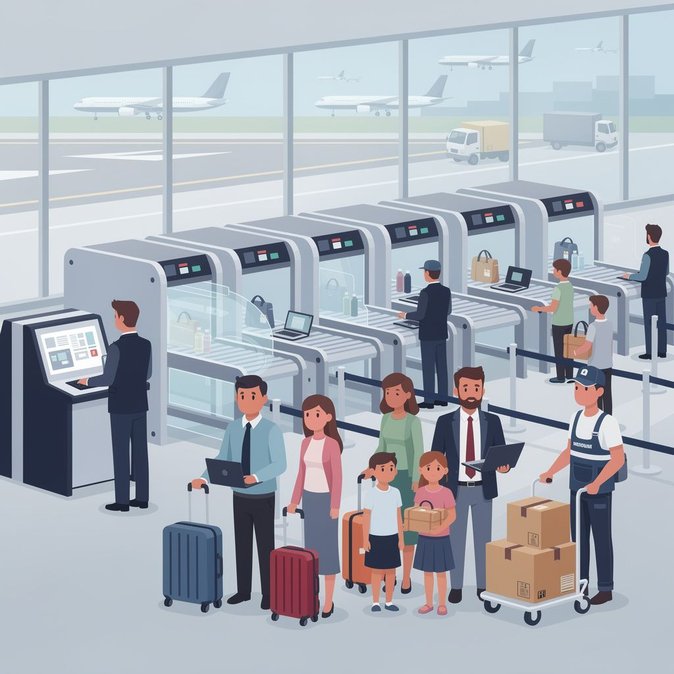
Cologne/Bonn Airport inaugurated its fully rebuilt central security checkpoint on 14 July 2026, just in time for the peak summer-holiday rush. The €25 million project equips all eleven lanes with next-generation computed-tomography (CT) scanners that produce 3-D images of cabin baggage in real time. Passengers no longer need to remove laptops or liquids, and the liquid limit has been increased from 100 ml to 2 litres per container—reducing wait-times by up to 50 percent in early tests. Airport CEO Thilo Schmid called the opening a “milestone for German aviation,” noting that Frankfurt and Berlin currently operate CT units on only a fraction of their lanes. The project is part of the airport’s wider “Next Chapter” modernisation, which includes refreshed retail areas and an integrated Airport Operations Control Centre staffed jointly by the Bundespolizei, Securitas and airport personnel. For airlines such as Eurowings—Cologne/Bonn’s largest carrier—the smoother flow is expected to cut minimum connection times and reduce missed-flight costs. Business-travel managers can schedule tighter itineraries, while global shippers gain a more reliable hub for time-critical cargo that travels as passenger baggage. Families are also catered for via a dedicated “Kids Lane” featuring child-height belt rollers. Germany’s Federal Police retain responsibility for aviation security oversight, but since January 2025 Cologne/Bonn has self-managed checkpoint staffing and processes under § 5 of the Aviation Security Act. Early performance data from the AOCC will feed into the Interior Ministry’s review of nationwide CT-scanner roll-out plans scheduled for Q4 2026. The upgrade signals growing German adoption of technology-led passenger facilitation that aligns with the EU Entry/Exit System launched in April. Travellers and corporate mobility teams should nonetheless monitor each airport’s rules: most other German airports still apply the 100 ml liquid cap and require device removal until their own CT programmes go live.