Trump Administration Revives Controversial ‘Public Charge’ Green-Card Rule
EU report finds Italy still slow to activate asylum-transfer mechanism under new Migration Pact
Legco races to pass Huanggang Port co-location bill ahead of 31 July opening
Latest News

Ireland enacts law to scrap 32-million passenger cap at Dublin Airport
President Catherine Connolly has signed legislation allowing the government to remove Dublin Airport’s 32 million-passenger cap. Transport Minister Darragh O’Brien plans to revoke the limit after an environmental review, responding to pressure from Irish, European and U.S. airlines that argued the cap threatened connectivity and investment. The change should boost route growth and capacity for business travellers, although local environmental concerns must still be addressed.

DHS Finalizes Fixed-Term Visas for International Students, Exchange Visitors and Foreign Journalists
DHS has replaced “duration-of-status” with fixed end-dates for F-1, J-1 and I-1 visas. Most student and exchange visas will be capped at four years; media visas at 240 days (90 days for Chinese nationals). Extensions will require a new USCIS filing, slashing grace periods and increasing compliance burdens for universities, employers and foreign nationals.

Hong Kong lawmakers fast-track Huanggang Port bill, paving way for 24-hour co-located immigration checks
LegCo finished vetting the Huanggang Port co-location bill on 16 July and will vote on it on 17 July. The legislation must be in force before the port’s 31 July commissioning, enabling 24-hour joint Mainland–Hong Kong immigration checks that cut clearance time to five minutes and double capacity. The upgrade is crucial for business and cargo flows in the Greater Bay Area.

France’s new immigration-asylum code takes effect, aligning with EU Migration Pact
Decree 2026-454, effective 16 July 2026, revises France’s immigration and asylum code to implement the EU Migration & Asylum Pact. It introduces faster border screening, digital contract uploads for transferees, tougher employer sanctions and Eurodac biometric data-sharing. Global mobility managers must update compliance processes immediately.

Police Expect 3 Million Applicants as Spain’s Extraordinary Regularisation Gains Pace
An internal police briefing cited by IMI Daily on 16 July projects up to three million applications for Spain’s one-off regularisation scheme, which grants residence to migrants who entered before 1 January 2026. While the programme could ease labour shortages, immigration offices face a data-processing bottleneck that may delay card issuance and create compliance risks for employers hiring newly regularised staff.
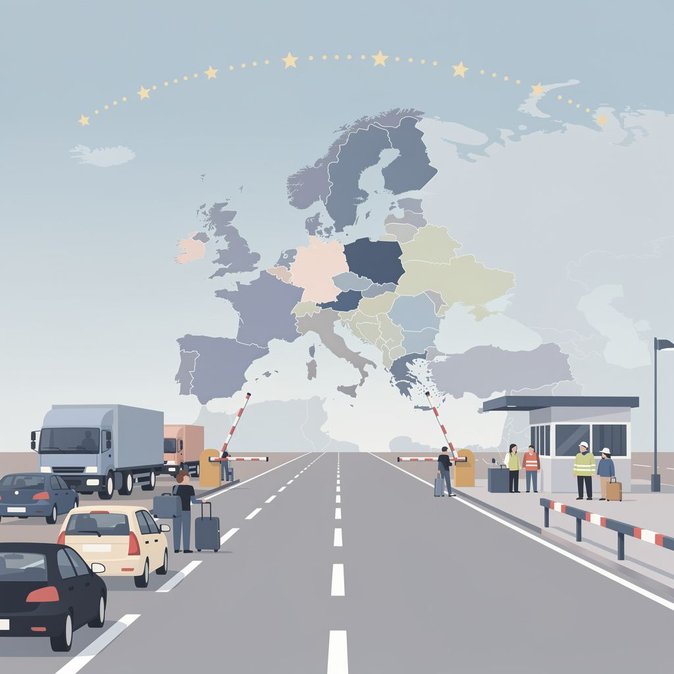
EU Commissioner urges Germany to scrap internal Schengen border checks before summer getaway
EU Migration Commissioner Magnus Brunner says falling migrant numbers and the new EU asylum rules make Germany’s prolonged border checks unnecessary. Business and political voices warn that summer traffic queues could hurt trade and tourism, urging Berlin to publish a timeline for ending the controls.

Paris and Rabat end visa freeze as French PM Lecornu visits Morocco
France and Morocco formally restored full visa issuance on 16 July 2026 during Prime Minister Sébastien Lecornu’s visit to Rabat. The two governments signed an enhanced mobility partnership featuring fast-track business, student and research visas and pledged deeper economic cooperation. The deal removes a major operational hurdle for companies and universities that rely on frequent cross-border travel.

EU Justice & Home Affairs Ministers meet in Dublin; visa security and returns top agenda
Ireland kicked off its EU Council Presidency by hosting Justice & Home Affairs ministers on 16–17 July. The agenda featured visa-security measures, data-sharing and faster returns of rejected asylum seekers, with Ireland presenting its own recent policy moves as case studies. While no binding conclusions were adopted, the discussions foreshadow stricter, more dynamic visa controls that corporates should track when planning assignments.

Dubai clarifies rules for new 5-year multiple-entry tourist visa
GDRFA-Dubai has published a detailed checklist for the UAE’s 5-year multiple-entry tourist visa, confirming bank-balance, insurance, ticketing and fee requirements. The self-sponsored visa allows stays of up to 180 days per year over five years and is aimed at frequent visitors and business travellers. Companies should track employees’ days in country and note that separate work permits are still required.

Belgium to halve Brussels asylum reception capacity, cutting 1,000 beds
Federal Migration Minister Anneleen Van Bossuyt will eliminate a further 700 reception beds on top of the 300 already cut, reducing the Brussels asylum network from 2,000 to 1,000 places. Brussels regional ministers and NGOs warn the move will push migrants into street homelessness and overload city services, while employers may face higher relocation costs for humanitarian hires.

Brazil Welcomes 5.26 Million Foreign Visitors in First Half of 2026, Signalling Tourism Rebound
Official data show 5.26 million foreign arrivals in Brazil in H1 2026—up 13 % year-on-year and the second-highest half-year tally on record. The rebound, led by Argentine, Chilean and U.S. visitors, is tightening hotel and airport capacity, forcing companies to plan business travel earlier and monitor immigration-service wait times.

Switzerland sees 16 % fall in asylum applications in first half of 2026
New SEM data show Switzerland registered 9 734 asylum claims in the first six months of 2026, 16 % fewer than a year earlier. June applications fell to 1 777, with Afghanistan, Eritrea and Algeria topping the list of origin countries. Officials link the drop to fewer Mediterranean arrivals and a decline in Turkish claims. The slowdown eases pressure on federal reception centres and supports the government’s tighter processing and return policies, but integration challenges remain.

EU Commissioner Brunner urges Germany to scrap internal border checks before peak summer travel
EU Migration Commissioner Markus Brunner has publicly asked Berlin to end the temporary border checks it maintains on its land frontiers with Austria, the Czech Republic, Poland and Switzerland. Falling irregular-migration numbers and new EU-wide asylum rules remove the original justification, while holiday traffic could create severe jams and added costs for business travellers and freight. The statement increases pressure on the German Interior Ministry to decide before the main vacation wave begins.