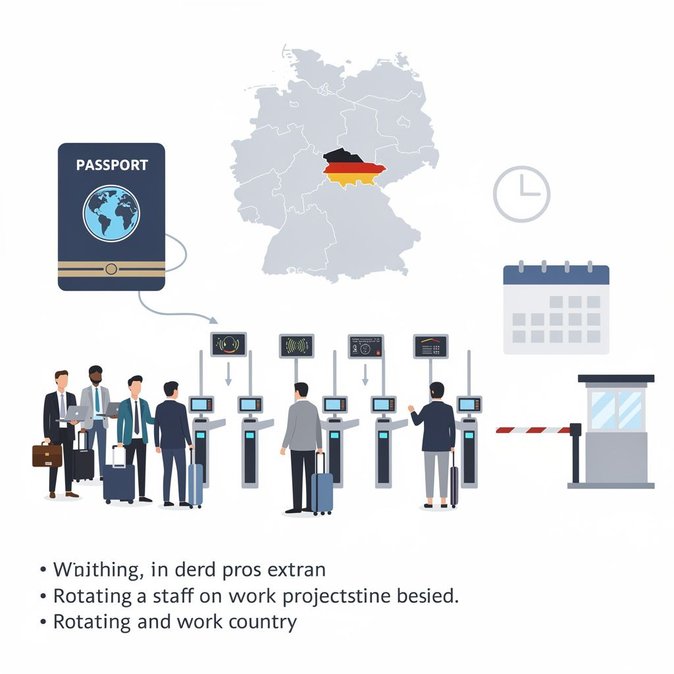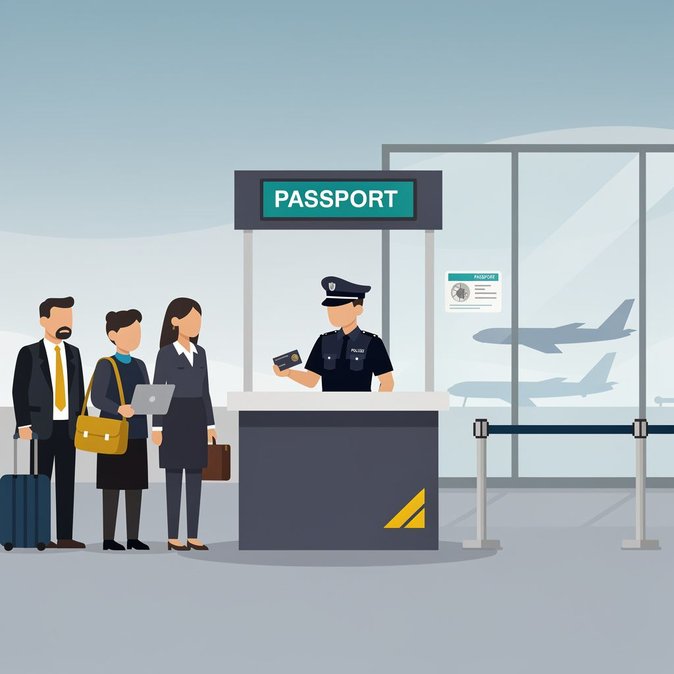
The German Federal Police (Bundespolizei) have begun their annual summer-peak enforcement campaign at international gateways and road crossings. In the first 24 hours of intensified checks, officers at Düsseldorf Airport carried out systematic entry- and exit inspections under the temporary Schengen internal-border regime that Germany has maintained since 2024. Three travellers – a German, a Turkish and a Dutch national – were detained on outstanding European arrest warrants and were only allowed to continue their journeys after paying a combined €8,640 in fines. The campaign, which runs through the end of the main school-holiday period in mid-September, focuses on outstanding warrants, document fraud and human-smuggling networks. Düsseldorf is a key hub for corporate travellers because of its dense European route network; delays at passport control were reported to reach 25 minutes at peak times on 21 July, roughly double the normal processing time. Similar spot checks are under way on the A3, A52 and A57 motorways from the Netherlands and on the land border with Poland. While the controls are justified under Article 25 of the Schengen Borders Code to combat irregular migration, business-travel associations have warned that they also affect legitimate commercial traffic. Companies bringing in non-EU technicians on tight turnaround projects should factor additional time for secondary screening and ensure that staff carry original employment contracts and hotel confirmations. The police emphasise that on-the-spot payment of fines is possible by credit card, but failure to do so may result in immediate custody and flight disruption. Travel-risk experts expect controls to become even more data-driven once the EU Entry/Exit System (EES) has collected several months of biometric records. Until then, corporate mobility managers are advised to alert travellers to longer queues, especially on Monday mornings and Friday afternoons when commuter flows overlap with leisure traffic.