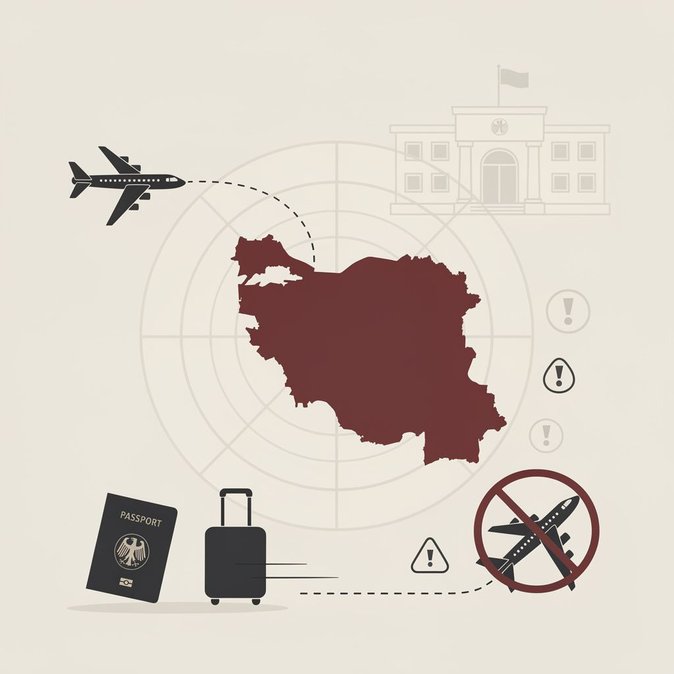
Germany’s Federal Foreign Office (Auswärtiges Amt) has tightened its travel advice for Iran, issuing an explicit warning to avoid all trips and urging the remaining German nationals in the country to leave immediately. The update, published on 21 July 2026, comes after a resurgence of air- and drone-strikes inside Iran despite last month’s US-Iran declaration of intent to de-escalate hostilities. In its revised notice, the ministry highlights an elevated risk of arbitrary arrest—especially for dual German-Iranian citizens—and underscores that consular assistance in Tehran is now “extremely limited.” Background: Since February, a cycle of retaliatory attacks between Iran and US-Israeli forces has rattled supply chains and commercial aviation corridors across the Gulf. While an interim cease-fire signed in mid-June briefly eased concerns, July has brought fresh strikes on civilian infrastructure as well as renewed EU sanctions on three Iranian carriers. The Foreign Office stresses that EU citizens must not purchase tickets on sanctioned airlines; doing so may constitute a criminal offence in Germany under the Foreign Trade and Payments Act. Business implications: Multinational companies with personnel or projects in Iran face mounting evacuation costs and insurance premiums. Export-control teams should audit transactions for sanctions exposure, while HR and mobility managers must update duty-of-care protocols, including mandatory ELEFAND registration and evacuation contingencies. Flight options out of Iran are increasingly scarce; firms are advised to pre-book seats via third-country hubs or prepare overland exit scenarios to Armenia or Turkey. Practical guidance: The ministry urges travellers to maintain stockpiles of water, fuel and prescription medicine, keep communication devices fully charged and refrain from photographing damaged sites or security forces. Companies should brief employees on the severe penalties for social-media posts critical of the Iranian regime. Dual nationals are reminded that Iran does not recognise second citizenship and may deny German consular access. Looking ahead: Berlin’s warning is likely to feed calls within the EU for a coordinated evacuation mechanism similar to the 2025 Sudan air-bridge. Insurance brokers report that war-risk surcharges for flights over Iranian airspace have already doubled since early July, a cost that will spill over to freight and passenger tickets alike.
Source: Auswärtiges Amt