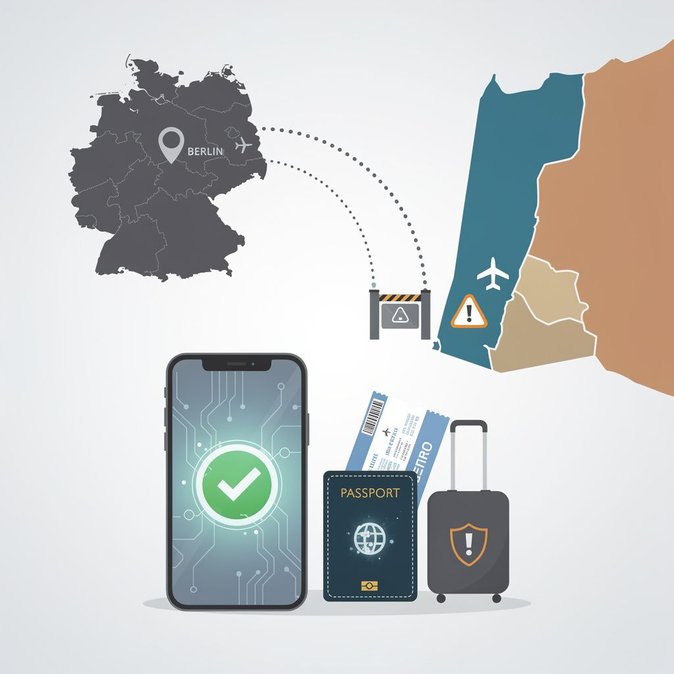
The German Federal Foreign Office (Auswärtiges Amt) has released a same-day update to its Israel and Palestinian Territories travel advisory dated 21 July 2026. Among extensive security warnings, the notice adds practical mobility changes that affect thousands of German tourists, engineers and NGO staff operating in the region. Key is the mandatory electronic travel authorisation “ETA-IL”, which replaces on-arrival paper permits for short stays of up to three months. Airlines are already enforcing the pre-travel authorisation, and travellers without the digital approval face denied boarding. The ministry stresses that passports must still be valid for at least three months beyond travel if an ETA-IL is used. In a separate clarification the advisory states that German citizens who wish to exit the West Bank into Jordan via the Allenby/Sheikh-Hussein Bridge must obtain a Jordanian visa in advance. Over-the-bridge visas on arrival, once offered to tour groups, are now suspended. Project managers sending dual EU/Jordan teams across the border need to revise routing and paperwork. With Israel’s security situation volatile, the Foreign Office reiterates that checkpoints can close without notice and “fliegende Checkpoints” inside the West Bank have increased. Corporations running regional supply chains should build contingency days into schedules and ensure staff are registered in the German crisis-preparation list. The advisory’s visa-specific changes demonstrate the growing trend toward digital pre-clearance in the wider Middle East, mirroring the EU’s forthcoming ETIAS. Mobility teams should review whether duty-of-care policies cover real-time country-rule shifts.