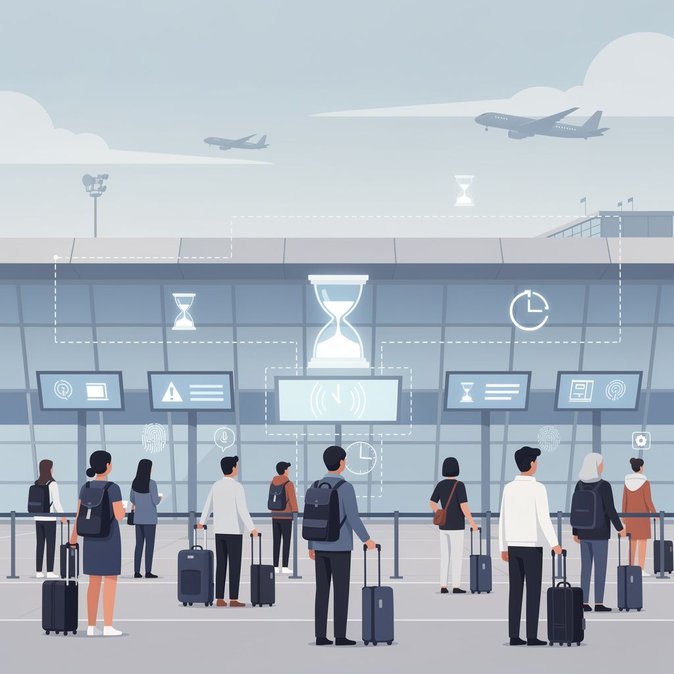
An industry campaign demanding a temporary halt to the EU’s new biometric Entry/Exit System (EES) intensified on 22 July when Finavia, the operator of Helsinki Airport, added its name to a joint letter from Airlines for Europe (A4E) and Airports Council International Europe. The coalition warns that EES teething troubles are already causing border queues of up to five hours at several major hubs and could bring parts of Europe’s air network to “a complete standstill” during August. The latest appeal—first reported by The Brussels Times—urges the European Commission to authorise member states to ‘switch off’ compulsory biometric registration between now and 1 September. Finavia told Finnish media that although average EES processing times at Helsinki are currently under two minutes, simulations show that a single system outage or self-service-kiosk failure during peak morning-wave arrivals could create a backlog of 8 000 passengers in less than an hour, overwhelming the airport’s non-Schengen pier. Finland’s Border Guard confirmed it has contingency plans to open additional manual lanes but supports the industry’s request for flexibility, noting that Helsinki Airport handles a disproportionately high share of inter-continental transfer traffic compared with its terminal size. The Border Guard said that if the Commission refuses a blanket suspension, it should at least allow airports to stop collecting fingerprints temporarily and rely on facial-image capture only, which would halve enrolment times. For global-mobility managers the dispute is more than a technical tussle: lengthy inbound delays increase the risk of missed connections and may force companies to authorise more generous lay-over buffers for staff routing through Helsinki. Employers should monitor Commission deliberations and advise travellers to build extra time into itineraries until clarity emerges. The Commission has acknowledged “considerable startup challenges” with EES but has not yet indicated whether it will grant the requested derogation. A follow-up meeting with industry stakeholders is pencilled in for 26 July.
Source: The Brussels Times