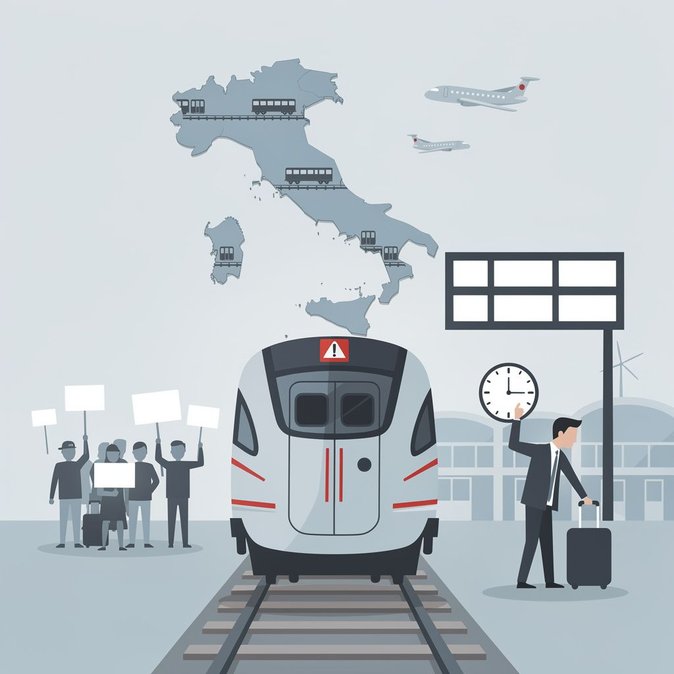
Italy’s summer of transport unrest intensified late on Thursday, 23 July 2026, when the country’s three main rail operators – state-owned Ferrovie dello Stato Italiane (Trenitalia, RFI), private high-speed carrier Italo-NTV and regional operator Trenord – all stopped services for a 24-hour, nationwide strike. The walk-out began at 21:00 on 23 July and is scheduled to run until 20:59 on Friday, 24 July. Unions FILT-Cgil, Fit-Cisl, UIL-Trasporti and Orsa Rail are protesting stalled wage negotiations and staffing shortfalls that they say have been exacerbated by a sharp rebound in post-pandemic travel. Under Italian law, minimum “servizi essenziali” must be guaranteed. Trenitalia published a list of protected Intercity and Frecciarossa trains, while regional operators promised limited peak-hour services. Nevertheless, RFI warned of “cancellations, delays and possible last-minute route curtailments” across the network, including the Leonardo Express airport shuttle between Rome Termini and Fiumicino. Freight trains are also affected, raising the prospect of supply-chain knock-on effects for manufacturers that rely on just-in-time deliveries. Business travellers face immediate challenges. Companies with mobility programmes have been advised to activate contingency plans such as rerouting staff onto domestic flights or arranging road transport. Travel-management companies report a 180 % week-on-week spike in requests for last-minute car-hire and coach charters. Hotels around Milan and Rome’s airports are preparing for higher “distress” bookings from stranded passengers. For global mobility and relocation managers, the strike underscores the importance of real-time duty-of-care monitoring. Employees arriving in Italy for short-term assignments may need to budget additional travel time or overnight stays, while EU Posted-Workers notifications that specify a place of work could be affected if staff cannot physically reach the site. Employers should document any delays to avoid breaching posting-rules or visa conditions tied to contractual start dates. Although rail strikes are a perennial feature of Italy’s industrial relations, the breadth of this action – covering high-speed, regional and commuter services at the peak of the tourist season – is unusual. Unions have threatened further stoppages in August if talks with the Ministry of Transport do not progress, so mobility stakeholders should monitor negotiations closely.