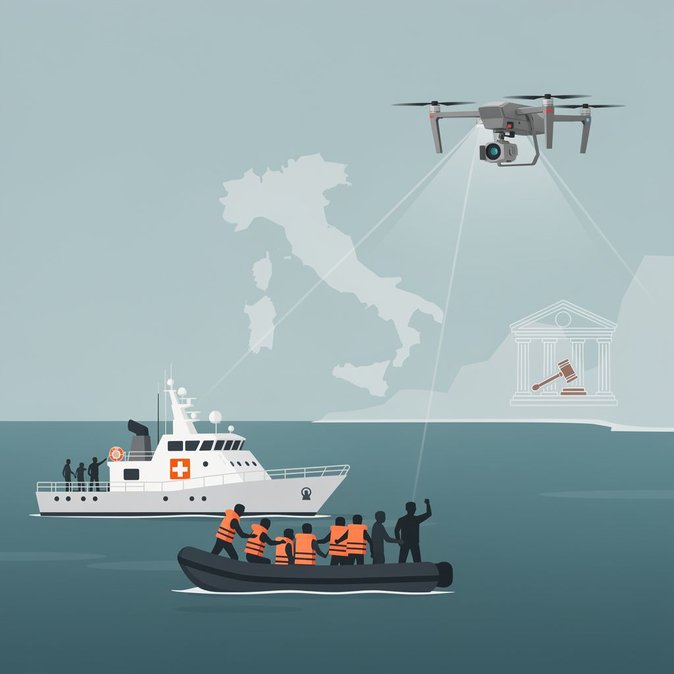
Italian prosecutors in Palermo have launched a formal investigation into the German NGO Sea-Watch following the publication on 23 July 2026 of drone footage captured by the EU border-agency Frontex. The video allegedly shows Sea-Watch 5 coordinating with a migrant boat in the Libyan search-and-rescue (SAR) zone before entering Italian waters earlier this month. Authorities are examining potential charges of “facilitating irregular entry” under Article 12 of Italy’s Immigration Act and complicity in human smuggling. The move marks the first time that Frontex surveillance images have been used to trigger criminal proceedings in Italy. Prosecutors argue that the footage indicates “pre-arranged rendezvous” rather than a distress response. Sea-Watch maintains that it acted strictly in accordance with the Law of the Sea after receiving a mayday relay from Alarm Phone and insists the Frontex feed was selectively edited. From a global mobility perspective, the case could reshape the compliance environment for NGOs and corporate maritime operators calling at Italian ports. Vessels engaged in humanitarian support or offshore projects must expect closer scrutiny of AIS transponder logs and communication records, while crew visas could be withheld if investigations name individual seafarers. Insurers warn that political and legal risks in Italian SAR jurisdictions may rise, potentially increasing premiums for chartered ships supporting energy projects in the central Mediterranean. The investigation also revives debate around Italy’s January 2026 “Piantedosi Decree”, which obliges rescue ships to head to a designated port immediately after the first rescue, limiting their ability to conduct multiple operations. Legal analysts note that the Sea-Watch case could set precedent on how evidence from EU-level agencies is admitted in national courts. Sea-Watch has 20 days to submit counter-evidence before any indictment. Meanwhile, the NGO’s latest rescued migrants have been assigned to the port of Brindisi, over 1,000 km from the rescue site, illustrating Italy’s strategy of dispersing arrivals across the peninsula.
Source: Euronews