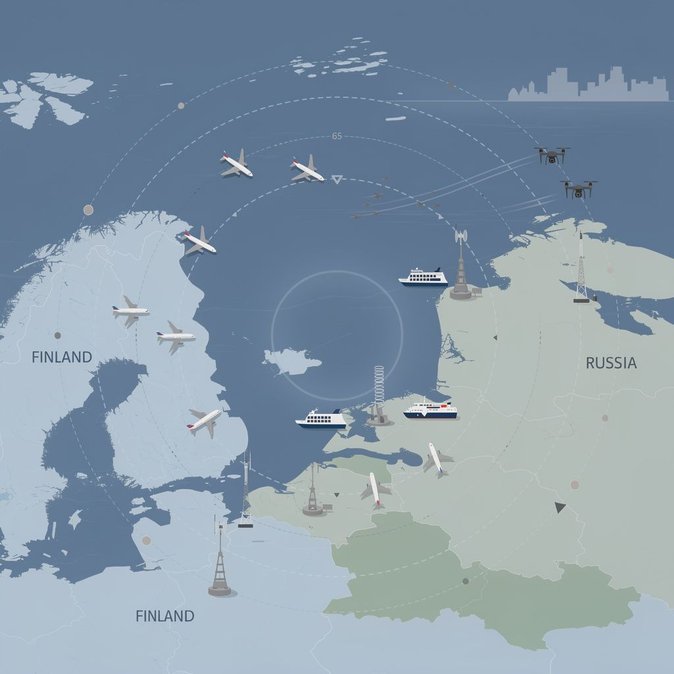
Early on the morning of 24 July the Finnish Defence Forces (FDF) declared a temporary no-fly and no-sail zone over a swathe of the eastern Gulf of Finland, stretching off the ports of Kotka and Hamina. The three-hour order – imposed at 02:46 and lifted at 06:56 – followed a wave of long-range Ukrainian drone attacks that ignited logistics centres near St Petersburg. Although Finnish radar detected no incursions, officials said the closure was a “precautionary measure to guarantee safety of by-standers and to safeguard Finland’s ability to respond if stray UAVs crossed the border.” Since the first confirmed drone fragments landed in south-eastern Finland in March, Helsinki has moved rapidly to harden its air-defence posture. Temporary air- and maritime-exclusion zones have already been declared on four occasions this month, and mobile radar units have been deployed along the 1 340-km frontier with Russia. Defence Minister Antti Häkkänen told reporters the latest incident “underscores why we are investing €1.4 billion in layered counter-UAS capabilities in the 2025–2028 defence budget.” Travel-industry representatives welcomed the fact that the closure was announced during the night, minimising disruption at Helsinki-Vantaa and the busy Kotka container port. Finnair rerouted two cargo flights via Swedish airspace, while Tallink Silja delayed an early-morning passenger ferry by 45 minutes. Insurance brokers nevertheless warned multinational companies to expect higher war-risk premiums on cargo transiting the Gulf if incidents continue. For corporate mobility managers the message is clear: routings that skirt the eastern Gulf of Finland now carry a higher operational-security risk. Firms sending assignees to the Kotka–Hamina industrial corridor are advised to brief travellers on potential transport delays and to register with Finland’s emergency-alert SMS system. Long-term expatriates should also make sure their residence-permit details are up-to-date in the Interior Ministry’s new DigiMigri mobile portal, which pushes real-time security notifications. The episode illustrates how the knock-on effects of the Russia–Ukraine conflict can trigger sudden transport restrictions far from the battlefield – and why contingency planning is now an essential part of doing business in Finland’s key logistics hubs.
Source: Yle News