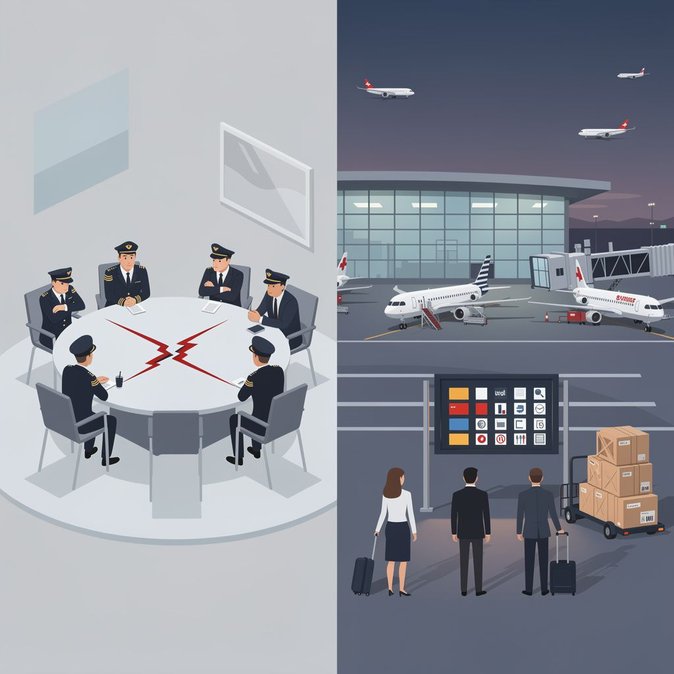
Swiss International Air Lines (SWISS) and its pilot union Aeropers have hit a wall in negotiations over the successor to the current GAV 23 collective labour agreement, which expires at the end of 2026. In a statement released on 25 July, Aeropers said it was ‘pausing’ negotiations until at least the end of August because the airline was “increasingly copying the Lufthansa model and abandoning Swiss values.” The pilots complain about chronic staff shortages, unpredictable rosters and the outsourcing of flights to wet-lease partners such as Helvetic Airways. SWISS rejects the criticism, claiming it has already devoted 17 negotiating days to the talks and that “direct exchange, reliability and compromise are part of our Swiss DNA.” Management argues that any new agreement must balance pilot welfare with operational stability across its long-haul and European network. The carrier is still recovering from crew shortages that forced hundreds of cancellations earlier this summer, and it has only just secured a new CLA 24 deal with cabin crew. Industry analysts warn that a prolonged stand-off could jeopardise the peak August and early-autumn travel season that is critical for Swiss exporters and inbound conference traffic. Zürich Kloten and Geneva have limited slack in runway or terminal capacity, meaning even small schedule changes ripple across the day’s rotations. Corporate travel managers are already building contingency plans that include rail alternatives and dual-ticketing on rival Star Alliance partners. For businesses, the dispute highlights the broader talent crunch in European aviation: pilots trained during the post-pandemic boom can command higher salaries abroad, while inflation has eaten into Swiss wage differentials. Human-resources teams should monitor SWISS’ operational reliability closely and brief travelling staff about possible short-notice rerouting or overnighting requirements. A negotiated solution before the winter‐schedule deadline of 27 October would avoid further uncertainty.
Source: Watson