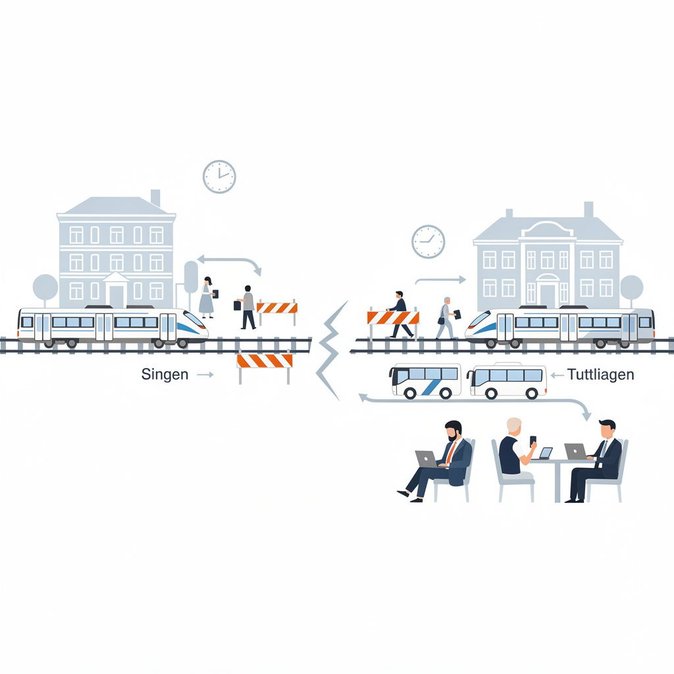
Swiss Federal Railways (SBB) is warning international passengers that today, 24 July, is the last – and often the most disruptive – day of the week-long engineering blockade on the key Zurich–Stuttgart corridor. Since 17 July all InterCity trains have been terminating at Singen on the Swiss side and at Tuttlingen on the German side, with a 35-kilometre gap bridged by replacement coaches running up to every 30 minutes. Although the works have been long-planned, Friday volumes are expected to peak as business travellers, commuters and holidaymakers converge on the route. SBB’s digital timetable shows journey times stretched from the usual 2 h 59 m to well over 4 hours, and through-ticket holders must physically leave the rail system, locate the correct bus stand and haul luggage on and off two extra vehicles – an accessibility headache for families and reduced-mobility passengers. German operator DB Fernverkehr has already reported seat shortages on onward ICE connections from Stuttgart, while Swiss tour operators are advising clients to re-route via Basel or fly. The closure is part of Deutsche Bahn’s €12 billion “Stuttgart 21” programme but underlines how quickly weekend works in a neighbouring country ripple through Swiss corporate travel programmes. Companies with German branches are re-booking staff on Monday 27 July meetings to videoconference as generous Swiss expense policies do not stretch to hotel overnights caused by rail engineering. The line is scheduled to re-open at 04:30 on Saturday, but SBB cautions that residual delays may persist until rolling stock and crews are back in position. For global mobility managers the episode is a reminder that the seemingly robust Swiss rail hub is highly interdependent on German infrastructure. Advance monitoring of SBB’s “Timetable changes in Europe” page and real-time alerts in the SBB Mobile app remain best practice for assignee travel safety and duty-of-care compliance.