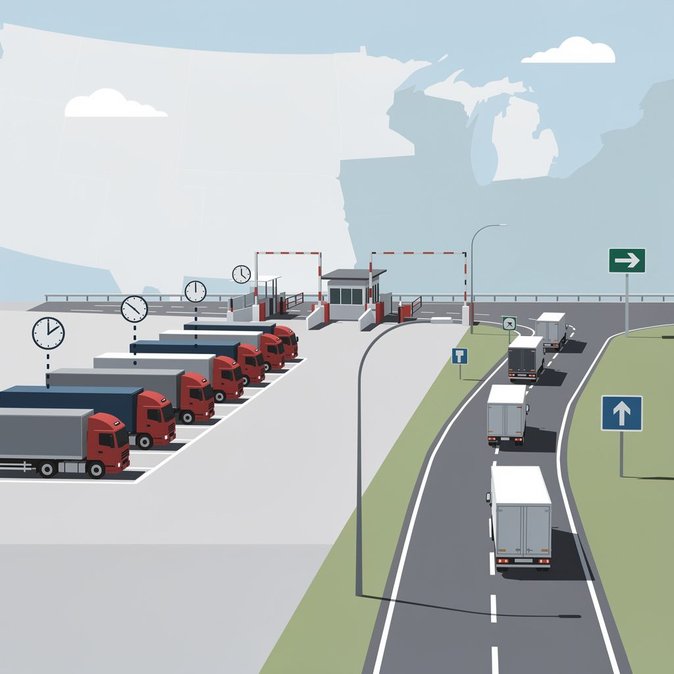
Real-time data from the CBSA public feed shows a growing bottleneck at Québec’s Lacolle/Champlain commercial port of entry, where wait times for U.S.-bound trucks reached 60 minutes at 12:30 p.m. EDT on July 26. The figure—classified as “High” by dashboard provider CargoTools—contrasts sharply with sub-20-minute averages at nine of the country’s 13 major truck crossings. The Lacolle corridor moves a significant share of perishable goods between Montréal, New York State and the U.S. Eastern Seaboard. A one-hour delay can trigger missed delivery windows under the U.S. Food Safety Modernization Act, leading carriers to scramble for temperature-controlled warehousing on the Canadian side. Freight forwarders are advising shippers to pivot loads through the nearby Rock Island/Derby Line or Woodstock/Houlton crossings, both showing “No Delay” on Sunday afternoon. For multinational employers the congestion also affects executive shuttles and specialist technicians who cross the border on short-term CUSMA business visas. Immigration counsel Miller Thomson LLP notes that officers at saturated ports may curtail discretionary entries such as flag-poling for work-permit issuance. Companies should therefore direct staff to quieter crossings or schedule applications for mid-week. The spike comes amid a CBSA systems outage and heavy summer tourism, underscoring the need for agile route planning. CargoTools recommends carriers integrate its open API, which refreshes every five minutes, into dispatch software so that drivers can make real-time diversion decisions. The dashboard also highlights that FAST lane usage cuts average crossing time by 30 % when documents are pre-cleared. With the August long weekend approaching, mobility teams should monitor the live feed daily and pre-book hotel rooms for drivers in case delays worsen. Failure to account for hold-ups can cascade into demurrage fees at Montréal’s port and jeopardise just-in-time production schedules for clients in Ontario and the U.S. Midwest.