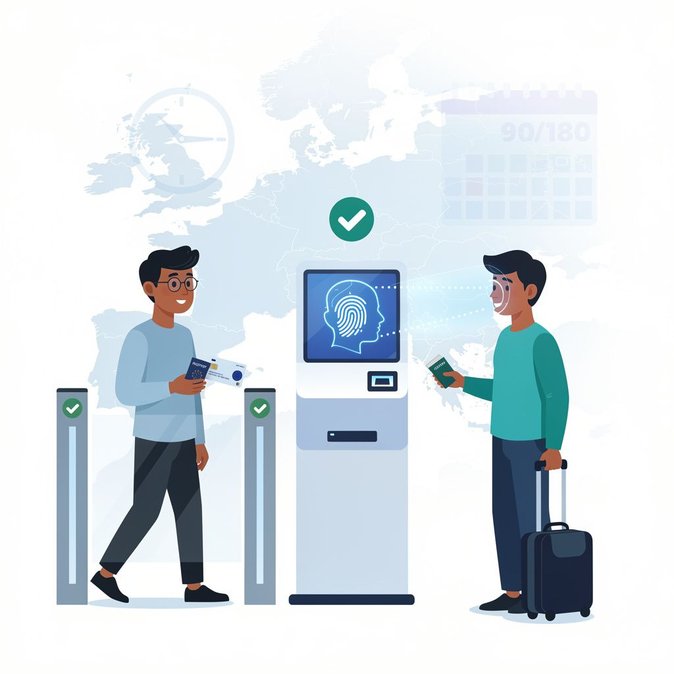
On 27 July 2026, the European Commission’s Directorate-General for Migration and Home Affairs published a detailed explainer on who is exempt from the EU’s new Entry/Exit System (EES), fully operational since April. Although the piece targets all non-EU nationals, it directly affects thousands of Indian executives and tourists who rely on Schengen short-stay visas for frequent travel. The EES records the biometric data and border movements of third-country travellers, replacing passport stamps with a digital register that counts permissible days in the Schengen Area. The new guidance confirms that Indian nationals holding valid long-stay visas or residence permits from any EES-participating country will not be re-enrolled each time they cross an external Schengen border. Family members of EU or EFTA citizens with residence cards are also exempt. Conversely, Indians travelling on short-stay C-type Schengen visas will continue to supply fingerprints and facial images at automated kiosks. For Indian multinationals that rotate staff into European hubs, the clarification is crucial. Employees seconded on intra-corporate transfer (ICT) permits are spared repeat biometric capture—saving up to 15 minutes per arrival—but visiting sales teams on short-stay visas should be pre-briefed on self-service kiosk use to avoid airport bottlenecks. Airlines have started advising passengers to allocate extra connection time at busy hubs such as Frankfurt and Paris-CDG. Travel-management companies (TMCs) recommend updating traveller profiles with residence-permit data to auto-flag EES exemptions. They also suggest including QR-coded copies of permits in mobile wallets to speed up border checks. As the system beds in, error disputes (e.g., over-stay calculations) must be filed within 10 days; mobility managers should maintain precise travel logs for auditors. The Commission’s article signals that more granular FAQs will follow, especially around crew exemptions and dual-national Indian passport holders. Until then, Indian businesses should treat the EES as a living system that rewards meticulous documentation.