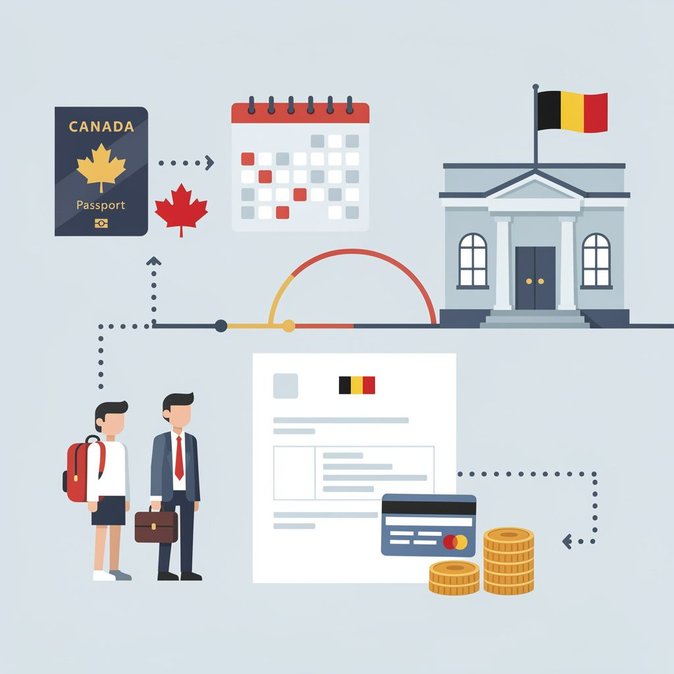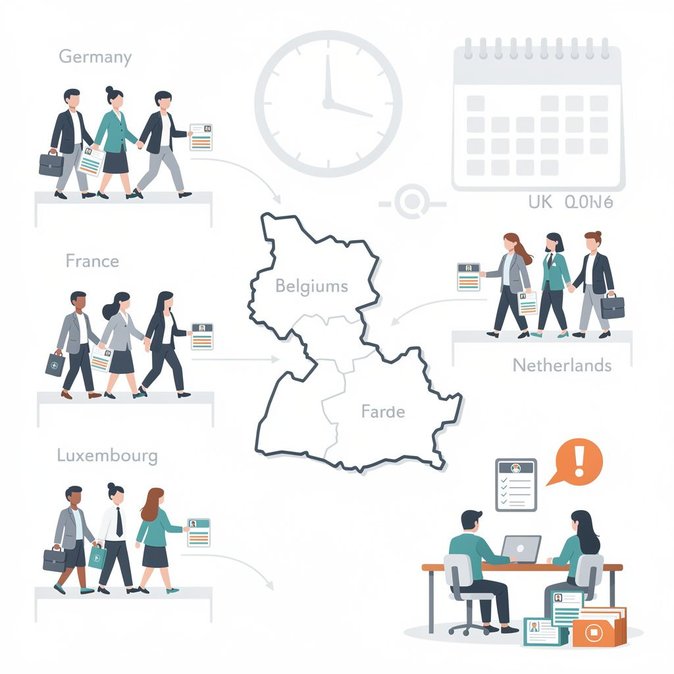
Belgium’s Immigration Office (IBZ) confirmed on 27 July 2026 that a long-awaited reform of the 1981 rules governing cross-border workers will enter into force the day after it is published in the Belgian Official Gazette in early August. The change affects tens of thousands of employees who live in neighbouring countries but commute daily or weekly to jobs in Belgium, especially in Brussels and the border provinces. Under the current regime, cross-border workers from Germany, France, Luxembourg and the Netherlands may enter Belgium with an *Annex 15* document issued by local town halls. IBZ says these paper permits “no longer reflect the reality” of modern labour mobility, where remote work, hybrid schedules and multiple work locations blur the traditional definition of a frontier worker. The new framework introduces clearer residence criteria, tighter verification of genuine cross-border status, and alignment with EU free-movement case law. A key transitional measure is a 12-month grace period: holders of a valid Annex 15 from the four neighbouring EU countries will have until August 2027 to switch to the new status or, where appropriate, apply for a Single Permit if they spend more than half their working time in Belgium. British residents, meanwhile, lose access to the Annex 15 altogether; IBZ “strongly advises” them to seek a long-stay *D* visa at the Belgian Embassy in London as soon as possible, a reminder that the Brexit transition arrangements are winding down. For employers, the reform brings both opportunities and compliance challenges. HR departments will need to audit payroll populations, adapt time-tracking to prove physical work locations, and budget for potential social-security shifts if commuters end up exceeding EU posting thresholds. Multinationals headquartered in Brussels report that up to 15 % of their workforce lives across the border, making the upcoming 12 months a critical window to regularise documentation. Failure to act could expose companies to fines starting at €2,400 per worker under Belgium’s Social Penal Code. Practically, employees should verify their commuting patterns, keep evidence such as fuel receipts or train tickets, and book municipality appointments early, as town halls in Liège and Arlon already report a spike in enquiries. Employers are urged to update immigration handbooks and inform staff via targeted webinars before the August rollout. IBZ has promised an online FAQ and a dedicated email helpdesk, but practitioners expect further clarifications in the implementing circulars that will follow the Gazette publication.
Source: Immigration Office (IBZ)