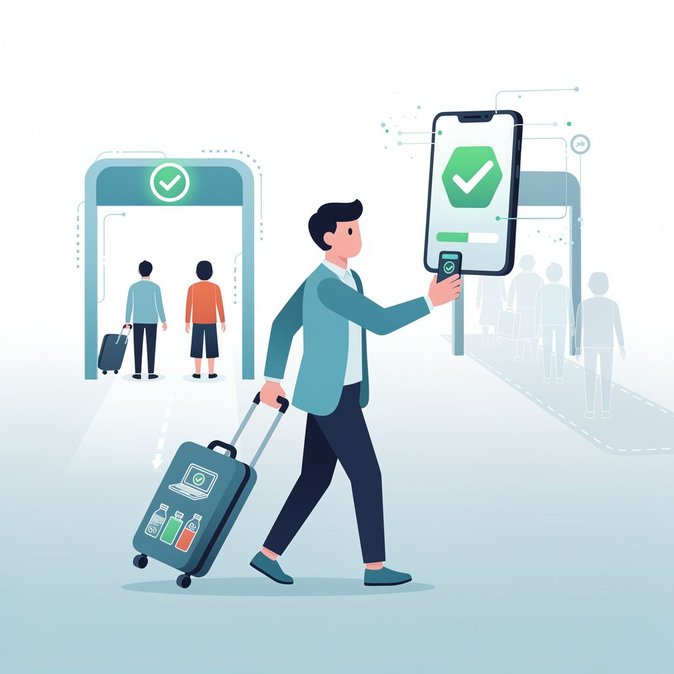
Brazil’s Federal Revenue Service (Receita Federal) quietly published Portaria Coana No 203 on 27 July, revolutionising how international travellers declare personal goods on arrival. The measure authorises **automatic registration and release** of Electronic Traveller’s Goods Declarations (e-DBV) at all Brazilian airports, removing the need for a customs officer to manually validate low-risk submissions. The e-DBV system—similar to Canada’s Advance CBSA Declaration—was introduced in 2018 but uptake by business travellers remained modest because the final step still required a paper print-out and face-to-face confirmation. From 1 August 2026, travellers who file their declaration in advance and fall within tax-exempt thresholds will receive an immediate QR code clearance in the mobile app, allowing them to proceed through the green channel. Random secondary inspections will continue, but the Receita expects average clearance times to fall from nine to under three minutes. For corporate mobility managers the change is significant: employees arriving with laptops, prototypes or trade-show materials frequently faced delays and potential fines when paperwork contained minor errors. Under the new rule, the system automatically cross-checks declared values with risk-profiles and releases most declarations without intervention, reducing exposure to penalties for unintentional mistakes. Customs brokers say the move aligns Brazil with OECD ‘Single Window’ best practice and should improve the country’s ranking in the World Bank Logistics Performance Index. Airlines are updating pre-departure emails to encourage passengers to complete the declaration online, and airport operators in São Paulo (GRU) and Rio de Janeiro (GIG) are setting up dedicated e-DBV Wi-Fi kiosks. Companies should update travel-policy handbooks to make electronic pre-declaration mandatory for staff carrying high-value equipment. Mobility teams may also wish to brief expatriates relocating with household goods that the automation currently applies only to **air mode**; sea-freight declarations remain manual.