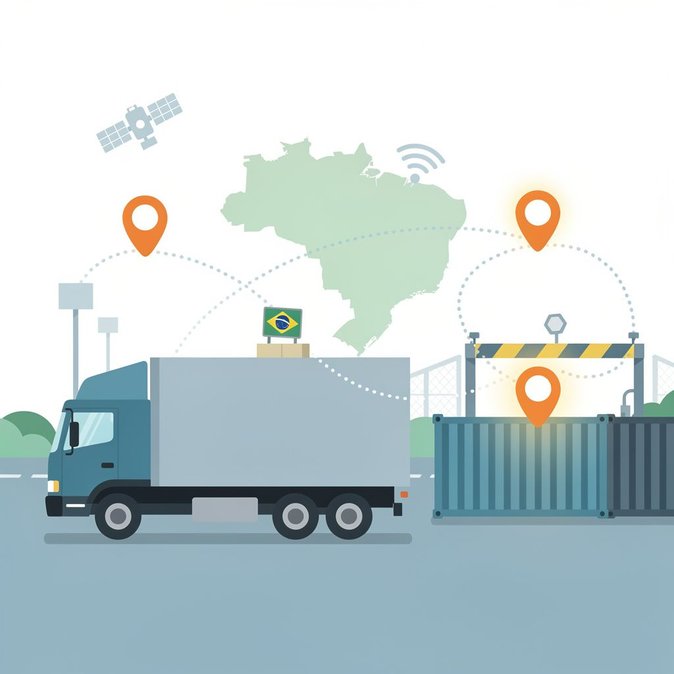
On 28 July 2026 Brazil’s Federal Revenue published Portaria Coana No. 200/2026, tightening control over the domestic leg of international road shipments that move under the customs-transit regime. The ordinance amends April’s Portaria 188 to require real-time GPS tracking of trucks and containers as they move between inland terminals, borders and ports. While the rule is aimed primarily at cargo, it matters for corporate mobility managers whose assignees relocate household goods or who rely on time-critical hand-carry shipments. From October, authorised logistics operators must feed live location data into the Receita Federal’s Transit Monitoring Platform. Any deviation from the approved route or unscheduled stop of more than 30 minutes will generate an automatic alert to customs and federal highway police. The government argues that better visibility will cut smuggling and cargo theft— perennial headaches along the São Paulo–Foz do Iguaçu and Porto Alegre–Uruguaiana corridors—and speed up release at the final point of export or import. Industry associations such as ABTI (the international transporters’ lobby) broadly support the measure but warn that smaller carriers will need help to install certified tracking units. Companies shipping personal effects or project equipment should verify that their forwarders are enrolled in the new system. Failure to comply can result in fines and loss of Authorised Economic Operator (OEA) status, which would raise costs for global mobility programmes.
Source: Receita Federal (Coana)