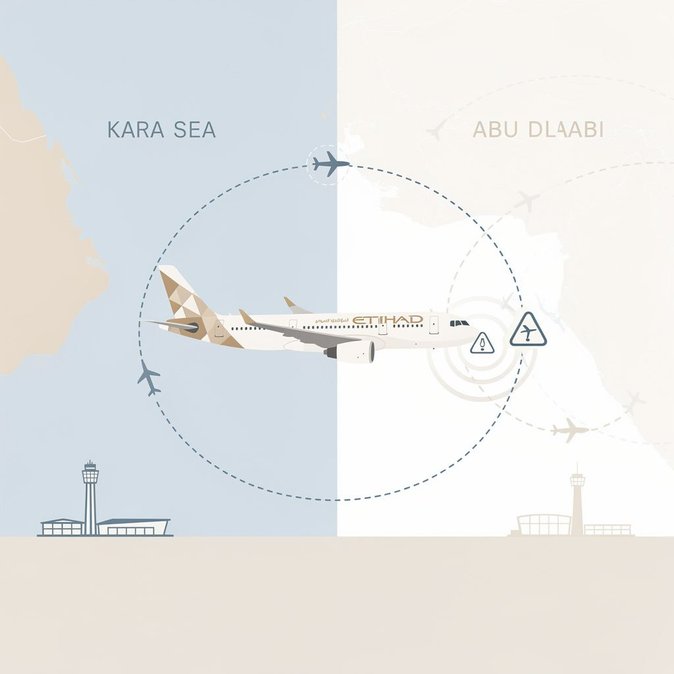
Etihad Airways flight **EY 299** from Karachi to Abu Dhabi made an emergency return to Jinnah International Airport shortly after departure on 31 July when pilots reported a technical anomaly on the Airbus A320. The aircraft landed safely and taxied to the gate without incident, Gulf News quoted the carrier as confirming. All passengers disembarked normally and were provided meals, hotel accommodation where required and re-booking assistance. Etihad did not specify the nature of the fault but reiterated that “the safety and comfort of our guests and crew is our number-one priority.” The airline is conducting a full engineering inspection before returning the jet to service. The turnaround comes against a backdrop of broader operational stress for Gulf carriers, already juggling dynamic reroutings and short-notice cancellations caused by geopolitical instability. A single-sector diversion can create knock-on crew and fleet imbalances across a tightly banked network—particularly on busy summer weekends when reserve aircraft are scarce. Mobility teams with staff booked on EY 299’s onward connections should note that Etihad has waived change fees and is re-accommodating passengers on later flights to Abu Dhabi and beyond. The incident is also a reminder for assignees travelling between Pakistan and the UAE to allow extra layover time and maintain active travel-risk profiles in company HR systems. From a compliance standpoint, employers should check that employees affected by involuntary delays do not inadvertently overstay Pakistan or UAE visa validity. UAE immigration currently grants a 10-day grace period on most visit visas, but extensions require timely online applications via ICP or GDRFA portals.
Source: Gulf News