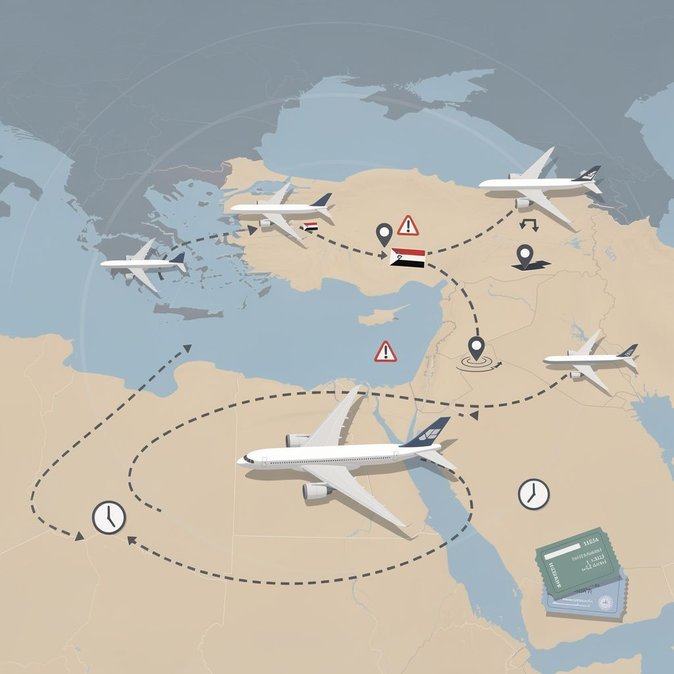
Just hours after the UAE’s partial airspace closure, a wave of international airlines announced fresh service cuts to Dubai and other Gulf hubs. An analysis by The National newspaper shows that carriers such as Air France, Singapore Airlines, British Airways and KLM have now pushed their Dubai resumptions to late August or even October. Regional operators Etihad, flydubai and Air Arabia have cancelled multiple rotations to Kuwait, Bahrain and Saudi cities through 27 July, while Emirates reports it has rebuilt about 75 percent of its pre-conflict schedule but warns of short-notice changes. Airlines cite operational risk and the need to avoid over-flight of conflict zones as the primary reasons. Travel-management companies (TMCs) say the cascading cancellations are complicating summer-peak corporate travel, with premium-cabin availability tightening and fares climbing 18-25 percent week-on-week for alternative routings via Doha, Muscat and Riyadh. Some employers are resorting to virtual participation for regional meetings, while others are shifting events to Europe or South-East Asia. The disruptions also affect talent-mobility pipelines. HR teams awaiting inbound new-hire arrivals report onboarding delays of up to two weeks. Immigration advisers recommend that companies issue offer-letters with flexible start dates and secure accommodation that can be re-cancelled without penalty. Policy specialists note that cancelled flights may reset validity on entry visas if travelers cannot arrive before the “first entry” deadline; mobility managers should coordinate with UAE sponsors to re-issue electronic entry permits where needed. Insurers remind companies that most corporate travel policies cover “wartime perils” only if specifically endorsed, making a policy review urgent for organisations with frequent Gulf travel. With the regional security picture still fluid, observers expect airlines to maintain a conservative stance. Global mobility leaders should therefore build redundancy—using multiple hubs and carriers—into travel programmes and keep abreast of carrier waiver policies to manage costs.
Source: The National