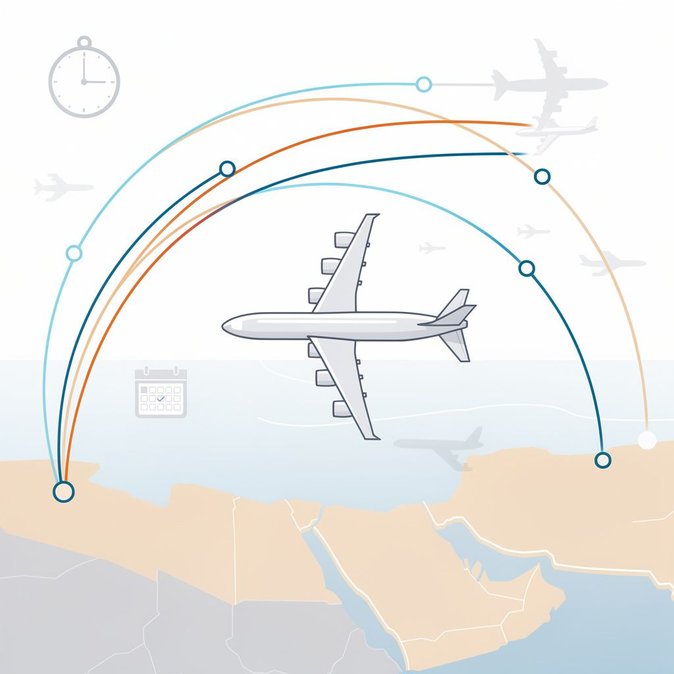
The UAE’s General Civil Aviation Authority (GCAA) announced on July 25 that “air navigation has returned to normal across the UAE’s airspace,” formally ending a patchwork of altitude caps and routings imposed in March when regional hostilities threatened over-flight safety. The decision follows a comprehensive security review carried out with defence and intelligence agencies and aligns with similar moves by Qatar and Saudi Arabia earlier this week. During the four-month precautionary period, airlines transiting the Emirates were rerouted via southern corridors and instructed to maintain higher cruising levels when flying westward toward the Red Sea. While passenger schedules were largely preserved, freight operators reported average block-time increases of 20 minutes and additional fuel burn that collectively added an estimated US$45 million to carrier operating costs. GCAA Director-General Saif Mohamed Al Suwaidi said real-time risk monitoring would remain in place and that the authority “stands ready to re-activate contingency plans should conditions deteriorate”. The regulator thanked passengers for their patience and airlines for coordinating closely with Air Navigation Services to keep the hub’s connectivity intact. The return to normal procedures is good news for multinational companies that use Dubai and Abu Dhabi as regional distribution centres. Logistics managers can now restore just-in-time routings through UAE gateways without buffer days, and travel managers can predict block times more accurately when drafting itineraries or calculating duty-of-care windows. Insurance underwriters may also reduce war-risk premiums on policies covering flights over the Strait of Hormuz. Airlines have already started filing standard flight-plans for August schedules, and Emirates and Etihad have signalled that they will re-introduce previously suspended late-night cargo departures to Europe and North America. Forwarders should see rate relief once carriers lift the temporary “security surcharge” that has been applied to east-bound belly-hold freight since March.
Source: Emirates News Agency (WAM)