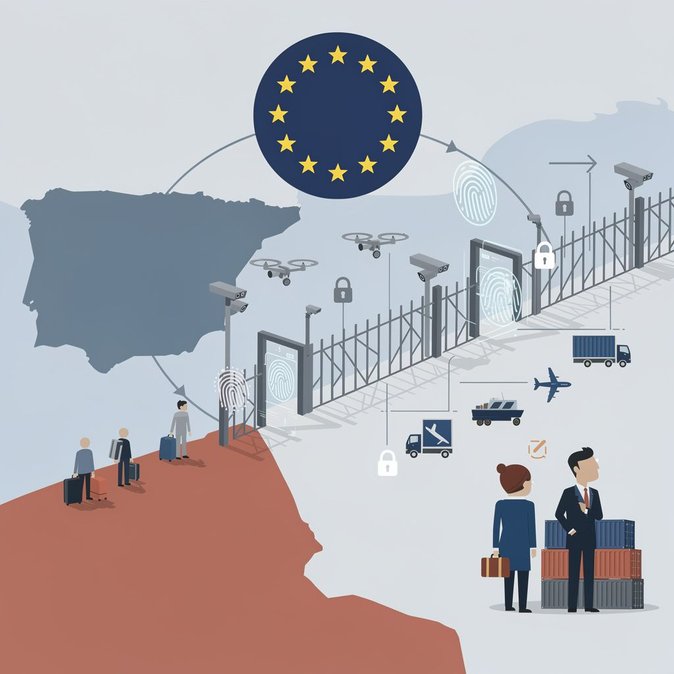
Italian authorities began carrying out document checks on non-EU passengers arriving from Spain at ports and airports from 14:00 CET on 1 August, invoking Article 28 of the Schengen Borders Code. Prime Minister Giorgia Meloni’s cabinet justified the one-month measure as a response to “a serious threat to national security” following Spain’s inability to contain the Ceuta surge. Under the decree, airlines and ferry operators must transmit advance passenger information for all Spain-originating routes. Border police can carry out secondary inspections and refuse entry to travellers deemed unable to justify their stay—principally holders of Moroccan, Algerian and Senegalese passports—while EU nationals continue to enjoy free movement. The Interior Ministry said the controls are “random and targeted” and will not amount to a blanket suspension of Schengen. Spanish carriers Iberia and Vueling report minimal cancellations so far but warn corporate clients to expect delays of up to 40 minutes at Rome-Fiumicino and Milan-Malpensa. Trade groups representing Italian tourism and logistics companies have criticised the move as “disproportionate,” pointing out that more than 80 percent of Spain-to-Italy traffic is intra-EU leisure travel in peak summer season. For global-mobility managers, the episode is a stark reminder that Schengen’s internal-border guarantees can be revoked at very short notice. Employees with third-country passports—particularly those on Spanish residence permits—should carry proof of status and business purpose. Companies with hub operations in northern Italy may also wish to shift connecting traffic through Paris or Frankfurt until normal procedures resume. Brussels has asked Rome to provide a risk assessment within 48 hours; failure to do so could trigger infringement proceedings. Whatever the legal outcome, the precedent of linking an African land-border crisis to intra-Schengen air routes may influence future responses to sudden migration spikes.
Source: Cadena SER