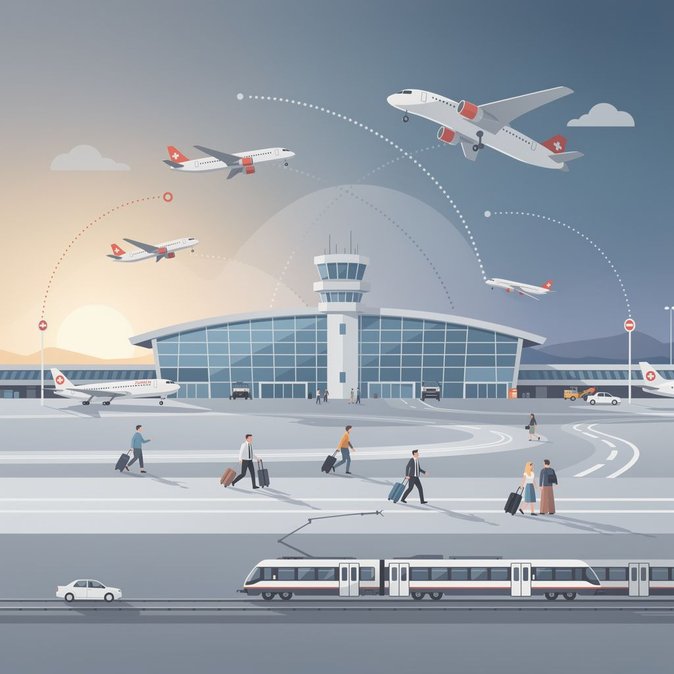
Zurich Airport — the gateway for most corporate travellers entering or leaving Switzerland — handled 26,129 take-offs and landings in July 2026, according to newly released operational statistics. The figure is 4.5 % higher than the same month a year ago and brings total flight movements for the first seven months of 2026 to 157,418, just 0.06 % below the record set in 2019 before the Covid-19 slump. Airport operator Flughafen Zürich AG said the busiest day of the month was 10 July, when 900 aircraft movements were recorded. The increase is being driven by a sharp rebound in long-haul corporate traffic and by resilient leisure demand despite geopolitical tensions in the Middle East since February. Business-oriented carriers such as Swiss, Lufthansa and Singapore Airlines have restored nearly all frequencies, while private-jet traffic — an important barometer for executive mobility — continues to run above 2019 levels. The recovery is mirrored across Swiss aviation: Geneva and Basel airports are also reporting double-digit percentage increases in movements, although Zurich remains the primary intercontinental hub. For global-mobility managers the numbers matter: higher slot utilisation makes it easier to secure last-minute travel for project teams, expats and fly-in service engineers. It also signals that Swiss immigration desks, ground handling and rail links to the airport are once again operating at peak capacity, reducing the risk of the bottlenecks that characterised the early post-pandemic reopening period. HR teams scheduling short-term assignments should nevertheless note that Zurich’s busiest days now fall mid-week, increasing hotel rates around the airport. The airport’s performance also has policy implications. The Federal Office of Civil Aviation is expected to finalise a new night-flight exemption framework later this year; today’s figures will strengthen lobbying by airlines to extend the current 23:30 cut-off. Meanwhile, cantonal authorities are revisiting public-transport connections to handle forecast passenger growth of 20 % by 2028. Detailed passenger numbers for July — including origin-and-destination trends that corporates use to benchmark travel policies — will be published on 12 August. Until then, mobility planners can treat the July movement data as a clear sign that Switzerland has effectively normalised international air connectivity, restoring one of the key enablers for cross-border business and talent flows.
Source: SWI swissinfo.ch