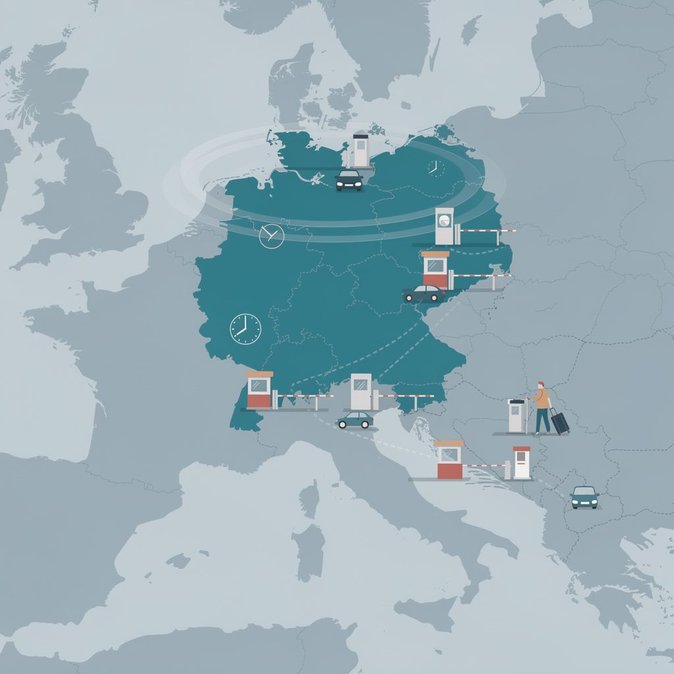
The European Commission has published an updated Schengen dashboard showing that Germany has notified Brussels of a new six-month extension of its internal border controls. The notification, dated 14 September, prolongs checks from 16 September 2026 through 15 March 2027 along all land borders—France, Luxembourg, Belgium, the Netherlands, Denmark, Austria, Switzerland, the Czech Republic and Poland. Berlin justifies the move with continued high levels of irregular migration, migrant-smuggling networks and pressure on reception facilities. The extension means the controls—first reintroduced on selected frontiers in 2024—will have run for a full year by March, the maximum period normally allowed under Article 25 of the Schengen Borders Code before an exceptional procedure is required. For multinationals that rely on hassle-free travel within the Single Market, the prolonged German checks create additional compliance costs. Cross-border service technicians and sales staff must still treat the frontier like an external EU border: passports or national ID cards are compulsory, and third-country workers need to carry residence permits and work contracts. Trade associations fear that the patchwork of national controls—Austria, Poland, Spain and Denmark have active regimes as well—distorts the level playing field for the EU’s logistics sector. The Commission has signalled it will present Schengen-reform proposals after the 2027 European elections, but for now businesses must continue to plan for intermittent ID inspections and possible delays of up to one hour on key trucking corridors. Travel-management companies recommend updating employee briefings, especially for cross-border drivers who may wrongly assume the Franco-German or Dutch-German frontier is still a “green” border.