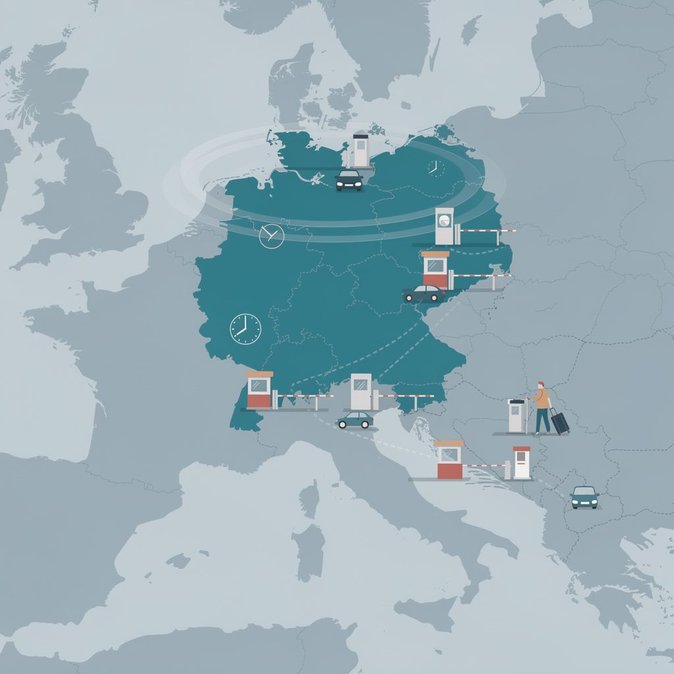
The cost of Germany’s temporary internal border controls is heading for parliamentary scrutiny. In a “Kleine Anfrage” (minor interpellation) tabled on 14 September 2026 (document 21/7934), the Left Party queried the Federal Government about the financial and manpower burden of the checks reinstated at Frankfurt (Oder) road, rail and motorway crossings since March 2026. The controls, justified by the Interior Ministry as a response to people-smuggling networks operating along the so-called Belarus route, are Germany’s most extensive since the 2015 refugee crisis. While business travellers and commuters have become accustomed to sporadic spot checks, logistics companies report average delays of 40–60 minutes per truck on the A12 motorway at peak times. Parliamentarians now want hard numbers: How many Bundespolizei duty hours have been logged? What overtime costs are accruing? And what is the hit to trade flows on the busy Rotterdam–Warsaw corridor? The last publicly available figure dates from May, when Interior Minister Alexander Dobrindt mentioned €38 million in additional policing costs up to April. If the government responds before the current six-month authorisation expires on 15 September, MPs could force a debate about whether an extension beyond that date is proportionate. Industry bodies including the German Logistics Association (BVL) favour a shift back to mobile patrols rather than fixed checkpoints, arguing that congestion undermines Germany’s export competitiveness. For global-mobility teams the parliamentary query is more than politics: every extension requires advance notification under the Schengen Borders Code. A last-minute renewal could complicate visa-holder travel plans and raise questions about passport stamping for commuters who cross several times a week.