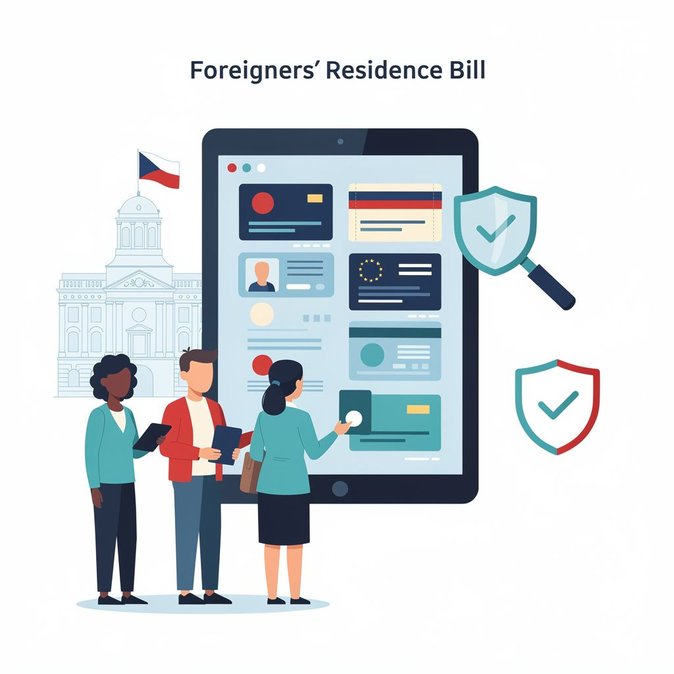
In a key legislative move yesterday, the Chamber of Deputies passed the long-awaited Foreigners’ Residence Bill, a complete rewrite of the 1999 Aliens Act. The new text mandates a fully digital case-management platform that will replace paper applications for long-term visas, employee cards and residence renewals. Each foreign national will be assigned a secure electronic account through which all filings, fee payments and official correspondence will be routed. The Interior Ministry argues that the change will shave weeks off routine processing times while giving police and labour inspectors real-time access to identity data. Beyond digitalisation, the bill introduces compulsory registration for EU/EEA citizens staying in the country for more than 90 days – a major shift from the current voluntary system. Officials estimate that some 200,000 EU nationals living in the Czech Republic are not recorded in any state database; municipalities lose per-capita funding and struggle to enforce local taxes. The Interior Minister, Lubomír Metnar, told MPs that better data “will let us steer resources where foreign communities actually live and act faster against offenders.” Security provisions have also been tightened. Authorities will gain broader powers to revoke residence if a foreigner is convicted of a serious crime or deemed a threat to public order. Sponsors such as employers, universities and sports clubs will be made financially liable if the invitee overstays or works illegally. The bill preserves existing pathways for family reunion and study, but business groups secured an amendment obliging ministries to publish annual work-permit quotas three months earlier than today so companies can plan recruitment cycles. If the Senate endorses the text, the digital platform will launch on 1 January 2029, with mandatory e-communication phased in from 2030. Multinationals operating mobility programmes in Prague and Brno should start auditing their HR workflows and document retention policies now; late adoption could trigger processing delays or fines once paper files are phased out. Global relocation providers meanwhile see opportunities to integrate API feeds from the new system into their case-tracking dashboards, giving expatriates visibility similar to parcel tracking. While full implementation is years away, yesterday’s vote locks the roadmap in place and signals that Czech immigration will soon be “digital-first.”
Source: Advokátní deník