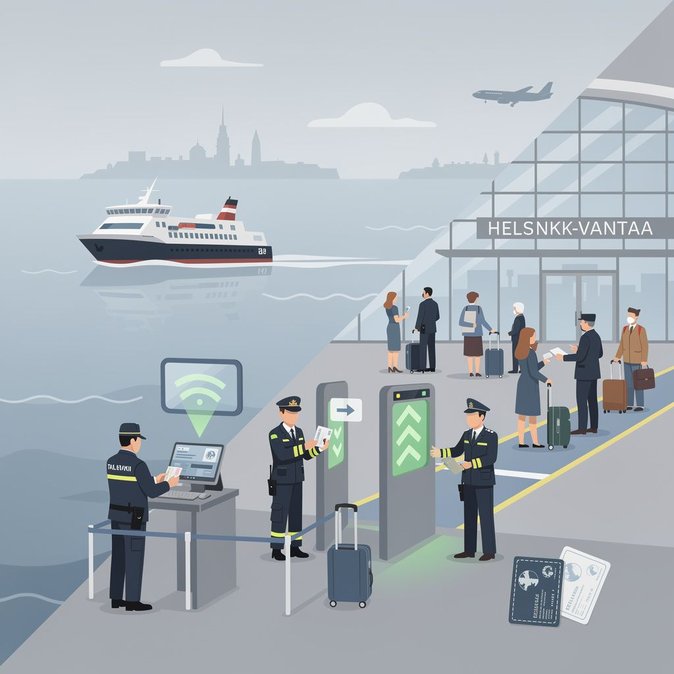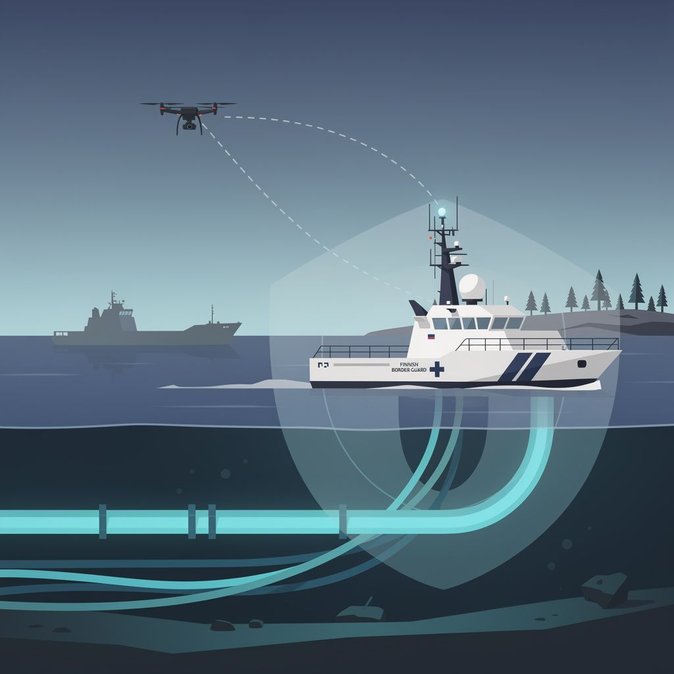
Parliament is set to debate sweeping amendments that would give the Finnish Border Guard unprecedented authority to intervene at sea and in the air. A government bill published on 15 September 2026 extends the agency’s remit to the surveillance of critical under-sea cables and pipelines in Finland’s territorial waters and Exclusive Economic Zone. The move follows high-profile sabotage incidents in the Baltic and North Sea that disrupted energy and data links. If adopted, the law will allow border-guard vessels to stop or even seize ships suspected of dragging anchors over seabed assets—a tactic blamed for last year’s €120 million gas-pipeline rupture. Officers would also gain the right to board “stateless” vessels operating under false flags. Interior Minister Mari Rantanen said the changes “answer the evolving security threats of our time” and will help Finland safeguard both national and EU infrastructure. The bill addresses the rapidly growing use of unmanned vehicles. The Border Guard would be empowered to disrupt or disable drones, surface craft and sub-surface robots whose activities endanger navigation, border security or critical facilities. Analysts note that drones have been used for illicit surveillance of ports and for smuggling across the eastern land border; giving coast-guard crews anti-drone options aligns Finland with new EU maritime-security guidelines. For shipping lines and energy operators, the legislation promises quicker incident response times and clearer rules of engagement. “Faster interdiction reduces downtime and insurance exposure,” said Liisa Mattila, Risk Manager at Gasgrid Finland. Cruise operators serving Helsinki welcome the assurance that underwater fibre links essential for passenger internet will be better protected. The Interior Ministry expects the reform to pass before the winter ice season. Training on the new powers would begin immediately, with joint exercises scheduled alongside NATO partners in early 2027.
Source: Verkkouutiset