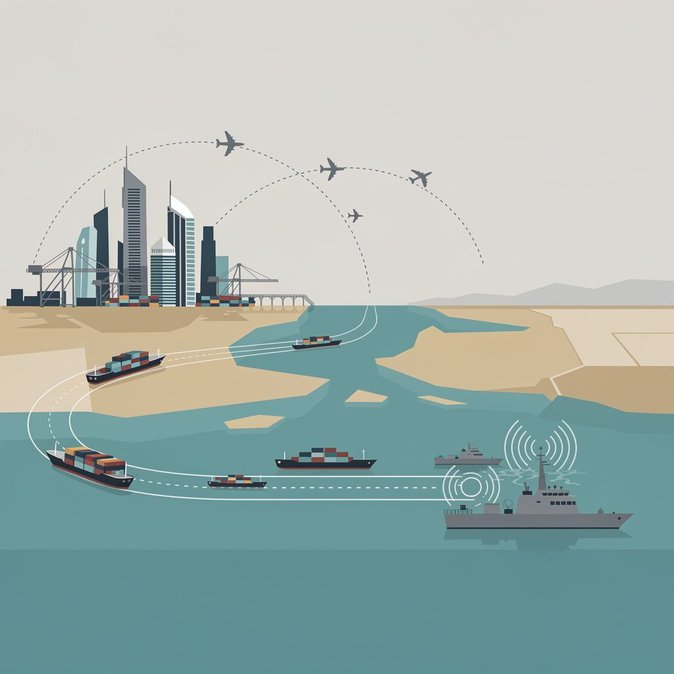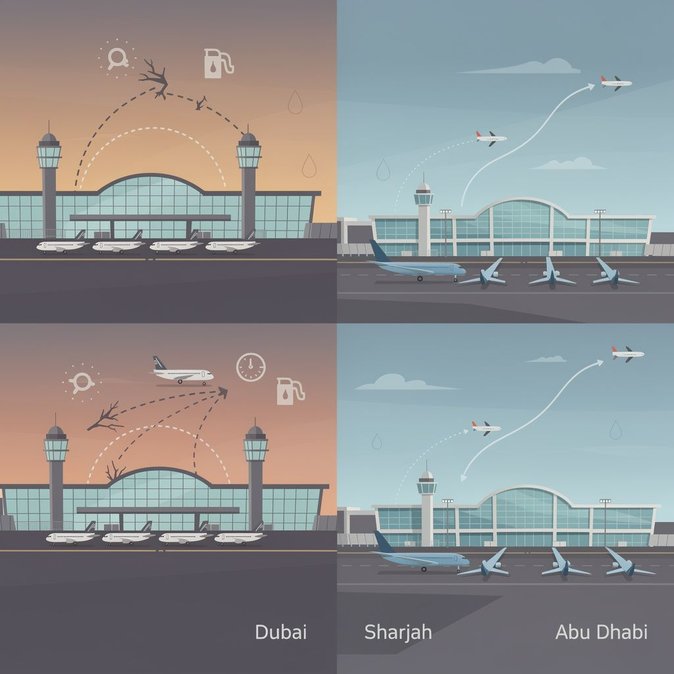
Air travellers in the United Arab Emirates woke up on 17 September to another mixed operating picture at the country’s three main airports. The latest schedule bulletin compiled by Gulf News shows that selected Emirates, flydubai and Air Arabia departures out of Dubai International (DXB) and Sharjah International were cancelled, while numerous other services were delayed. Abu Dhabi’s Zayed International Airport reported largely normal operations, although Etihad cautioned passengers to keep checking real-time updates. Behind the disruptions is the seven-month US-Iran war, which continues to distort commercial air-routes and push jet-fuel prices above US $180 a barrel. Airlines are re-routing around threatened airspace, crew rest limits are being stretched and insurers are demanding higher premiums for flights transiting the Strait of Hormuz. The knock-on effect is schedule volatility: even flights that remain on carriers’ booking systems can be pulled hours before departure. Emirates cancelled flight EK636 to Peshawar and delayed EK797 to Conakry; flydubai scrubbed FZ817 to Yanbu and FZ815 to Abha; while Air Arabia axed multiple Kuwait and Bahrain rotations from Sharjah. International carriers such as Air France, British Airways, Cathay Pacific and Singapore Airlines continue to suspend UAE routes altogether, underscoring the fragility of long-haul connectivity. Travel advisories have eased in some Western markets—Britain’s FCDO, for example, no longer warns against all-but-essential travel to the UAE—but regulators in the US, Australia and Canada still caution about unpredictable airspace closures. Corporate travel managers are therefore juggling fluid employee itineraries, higher insurance costs and the possibility of last-minute overnight stays. For business travellers the practical advice remains: double-check the flight number on the airline’s own app or website, complete online check-in to receive push alerts, allow at least three to four hours at the airport and keep contingency budgets for unplanned accommodation and ground transport. Until a durable ceasefire is reached, UAE airports are likely to operate under rolling schedule revisions.
Source: Gulf News