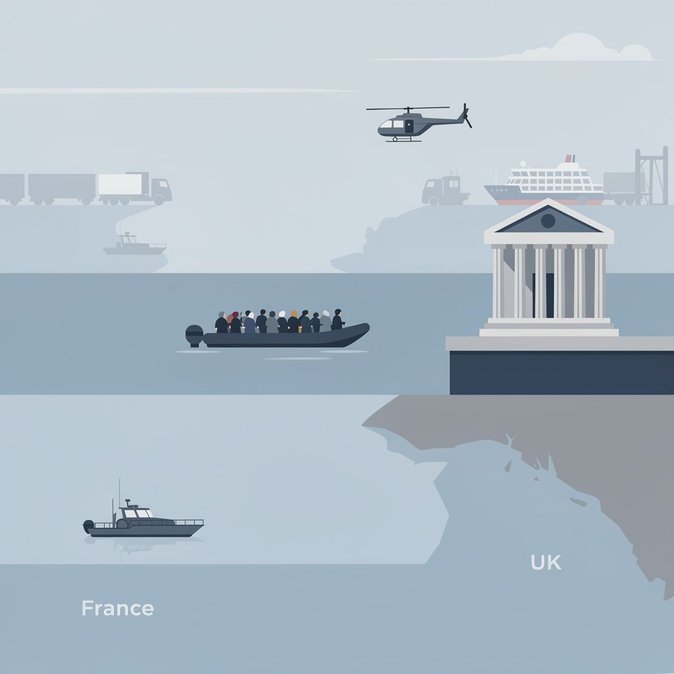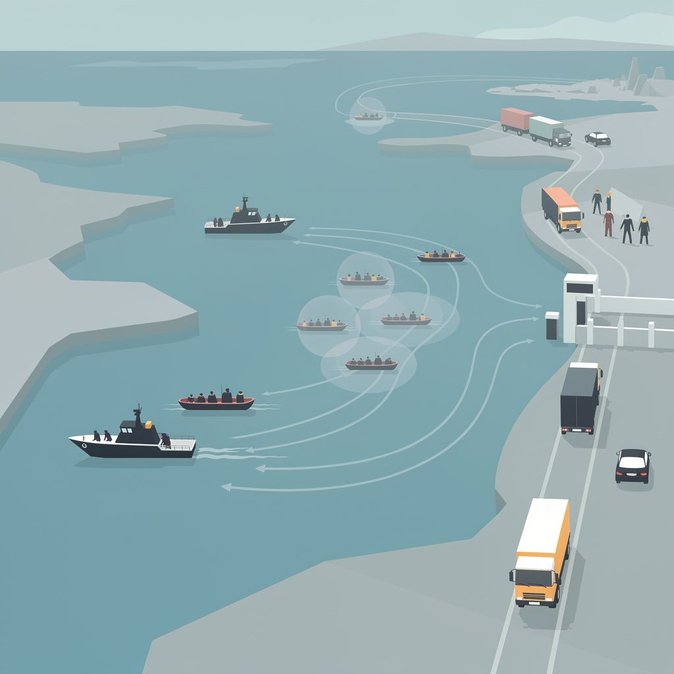
The UK Home Office’s latest transparency release on irregular Channel crossings reveals that zero boats departed the French coast on 17-20 September and only two made landfall on 14 September. The spreadsheet, updated on 21 September 2026, notes that daily totals exclude craft that were “prevented from departing France or intercepted by French authorities and returned to France,” underscoring Paris’s frontline role in the joint UK–France migration accord signed in August. For corporate mobility programmes, the data matter because they track pressure on border resources at the juxtaposed controls in Calais, Dunkirk and the Port of Dover. Reduced crossings free up French police and UK Border Force staff for routine business-traveller processing, limiting the spill-over queues that disrupted freight flows earlier this summer. Logistics managers moving critical equipment between French and UK sites should nonetheless watch the numbers: a sudden spike often triggers rapid redeployment of officers away from commercial lanes. Politically, the update gives the French interior ministry evidence that its €72 million annual contribution—financed partly by the UK—to maritime surveillance drones and coastal patrols is paying off. London, facing a self-imposed legal deadline to cut “irregular arrivals” by 40 percent in 2026, is already signalling that further joint investments are likely in the 2027 budget cycle if the trend holds. Human-rights NGOs caution that lower departure figures do not automatically equate to lower migration pressure. Some prospective entrants may be rerouting via Belgium, while others remain in makeshift camps around Calais. Employers considering corporate-social-responsibility outreach should liaise with local prefectures to ensure assistance complies with French asylum and labour-law rules.