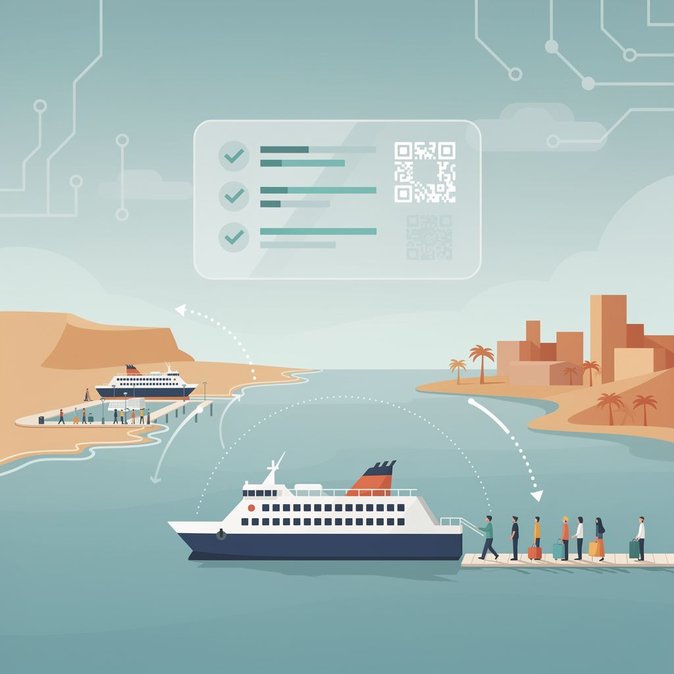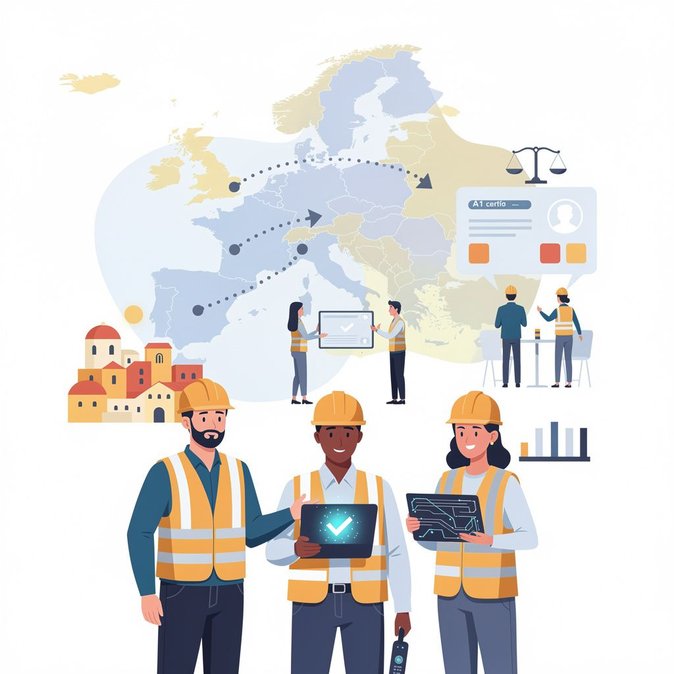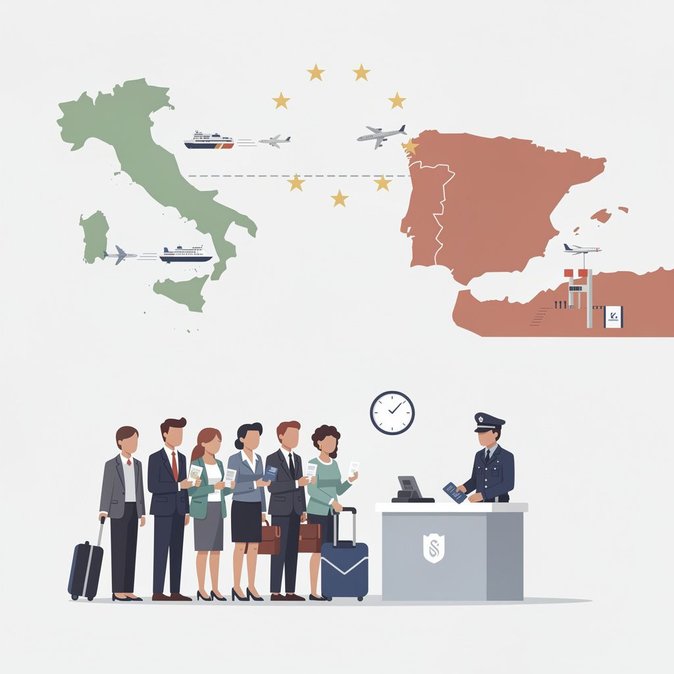
Business travellers landing in Spain from Italy will keep seeing passport booths and Guardia Civil officers on the jet-bridge for at least two more weeks. A new Interior Ministry order (INT/977/2026) published in the 19 September Boletín Oficial del Estado but taking legal effect at 00:00 on 23 September extends the temporary re-introduction of Schengen internal-border controls at Spanish airports and seaports that handle Italy-originating passengers. Madrid first re-activated the booths on 8 August in response to Rome’s own suspension of free circulation amid heightened irregular migration on the Central Mediterranean route. The measure was prolonged on 4 September and is now being rolled over a second time, running through 24:00 on 7 October. During this period airlines must channel all Italy-originating travellers—EU nationals included—through staffed checkpoints; private flights and empty ferries are exempt unless police deem a specific security reason. For companies shuttling staff between Milan and Madrid or shipping crews to Barcelona by ferry, the practical impact is longer queues and the need to carry a valid travel document issued within the last ten years and with three months’ validity beyond the intended stay. Carriers are advising passengers to arrive 30 minutes earlier than usual and to avoid tight onward connections at Madrid-Barajas or Barcelona-El Prat. The Interior Ministry stresses that the operation is intelligence-led and will be lifted once the “grave threat to public order” linked to secondary movements from Italy subsides. Under the Schengen Borders Code, further extensions would require a fresh, evidence-based decision. Multinational mobility managers should therefore monitor the BOE in early October in case controls are prolonged for a third time. From a compliance standpoint, the controls do not alter visa-waiver entitlements, but they do increase the likelihood that travellers will be asked to show proof of accommodation and means of subsistence (currently €121.10 per person per day). Employers sending assignees or project teams between the two countries should review documentation packs accordingly.
Source: Boletín Oficial del Estado (BOE)