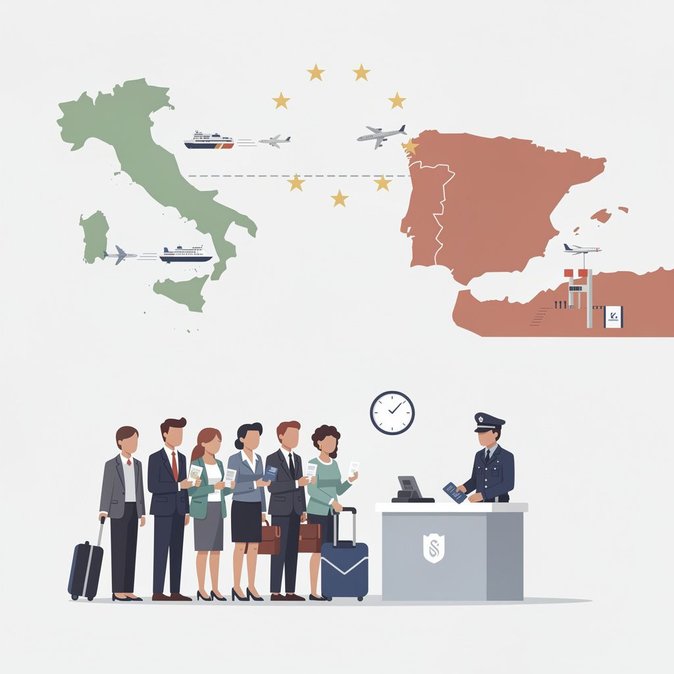
The Territorial Committee overseeing the annual ‘Operación Paso del Estrecho’ (OPE)—Europe’s largest seasonal migration by road and ferry—held its wrap-up meeting in Melilla on 23 September. The device handled 251 704 passengers and 57 791 vehicles this summer, up roughly 19 % on 2025, across 324 ferry rotations linking mainland ports with North Africa. Despite the surge, Delegada del Gobierno Sabrina Moh told participants that average waiting times at border and port checks fell “considerably,” crediting a new digital ‘pre-check’ system that lets travellers upload passport and vehicle data before arrival. Police used handheld readers to verify QR codes, trimming car-lane processing from 90 to 35 minutes at peak. For mobility managers the data confirm that Spain’s investment—€13 million in extra scanners, shaded parking and medical posts—paid dividends. Companies rotating expatriate staff to Algeria and Morocco reported fewer missed ferries and lower accommodation costs. The Ministry of Transport said it will study extending the QR system to cargo operators in 2027, which could cut customs clearance for perishable goods by up to two hours. The committee also highlighted 68 medical assists (all minor) during the August return phase and zero serious security incidents—an important milestone after the stampedes of 2022. Looking ahead, officials agreed to draft a joint contingency plan with French and Italian ports to cope with possible spill-over traffic if geopolitical tensions shift routes in the Central Mediterranean. Businesses that schedule large-scale staff rotations in June–September should bookmark the committee’s final report—due in October—as a planning tool for seat quotas, peak sailing dates and recommended documentation.