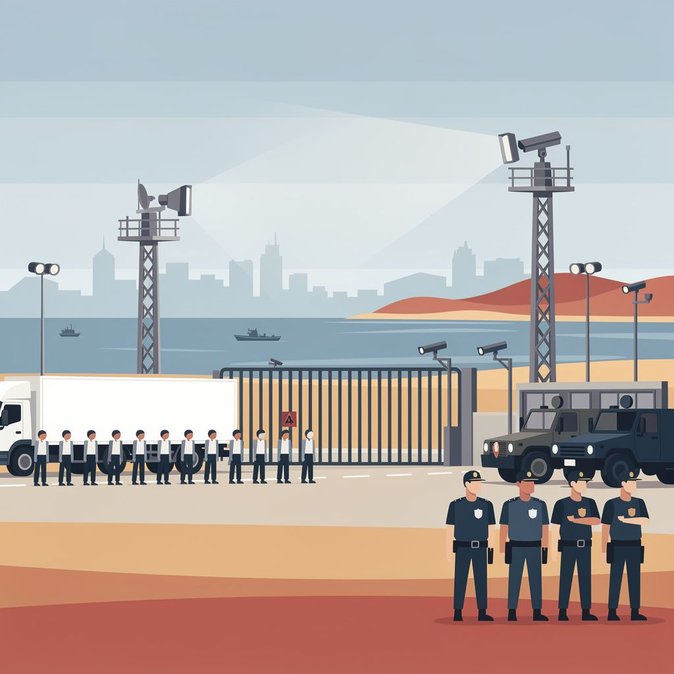
Spanish security forces woke up on 23 September to a tightly-sealed frontier in Ceuta and Melilla. Interior Minister Fernando Grande-Marlaska ordered additional Guardia Civil and Policía Nacional units, mobile surveillance cameras and crowd-control gear to both North-African enclaves after intelligence suggested that smugglers and migrant-smuggling networks were using Morocco’s parliamentary elections as a rallying call for a new mass crossing. Although the situation remained calm throughout the morning, senior officials confirmed that Spain had activated contingency protocols agreed with Rabat after the July surge that saw more than 12 000 people enter Ceuta in 48 hours. Diplomatic sources said Foreign Minister José Manuel Albares spoke twice with his Moroccan counterpart to ensure joint patrols on the Moroccan side of the fence and real-time sharing of drone imagery. From a business-mobility standpoint, the reinforced controls translate into slower processing times for cross-border workers—some 9 500 Moroccan residents who hold special passes to work in Ceuta and Melilla—and for lorry drivers supplying the enclaves. Logistics firms such as TransSabora reported average delays of 45 minutes, though no shipments were cancelled. Employers’ associations urged companies to build extra lead time into just-in-time supply contracts this week. Legal advisers also flagged that any migrant intercepted during the alert period may face the ‘accelerated return’ procedure introduced in Spain’s draft Immigration Bill. Companies planning to relocate staff to the enclaves were advised to check that employees carry proof of lawful residence and, where applicable, Spanish social-security registration to avoid misidentification during spot checks. While the heightened posture is meant to be temporary, experts warn that similar ‘electoral peaks’ are likely each time Morocco holds nationwide ballots. Businesses with cross-Strait operations should integrate these political-risk factors into their mobility planning calendars.
Source: El País