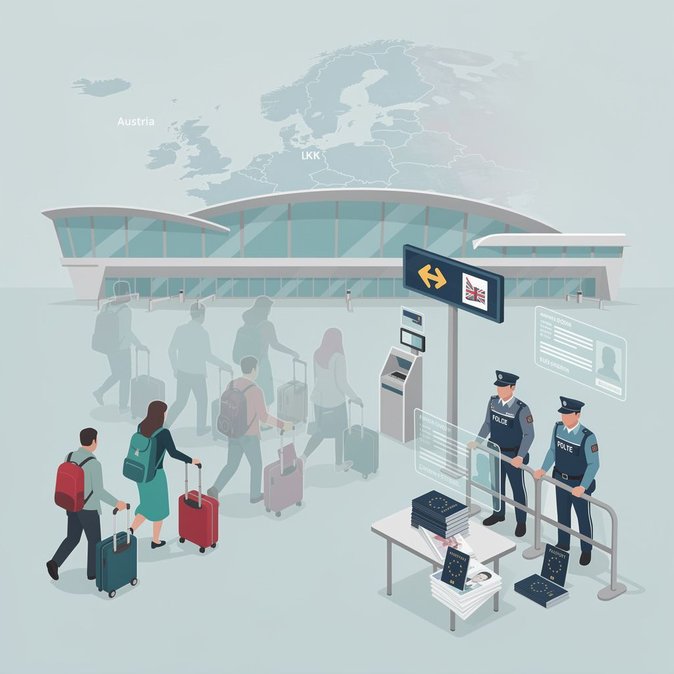
Austria’s Federal Criminal Police Office (BK) revealed on 23 September 2026 that Vienna served as a key logistics hub in a network that smuggled more than 450 migrants from the Schengen area to the United Kingdom. Dubbed ‘Operation Mineral’, the investigation—run with Europol—led to coordinated raids in Italy, Spain and the UK, netting six ringleaders and seizing forged passports, electronics and bank accounts worth over €600,000. The group exploited the lack of routine exit checks within Schengen. Clients—mainly from Afghanistan and India—entered legally with genuine short-stay visas, then swapped their passports for high-quality forgeries sourced in Vienna’s mobile-phone shops. The migrants typically flew to Ireland and crossed the land border into Northern Ireland to avoid UK visa controls. For Austrian compliance teams the case is a cautionary tale: the ringleaders used small consumer-electronics import companies in Vienna as cover for document trafficking. Corporate KYC controls that flag unusual volumes of parcel traffic to the UAE and Spain could have identified the pattern earlier. Border procedures will tighten as a result. The Interior Ministry is considering random exit checks at Vienna Airport targeting passengers on one-way fares to Dublin. Carriers operating Vienna–Dublin flights may face new data-sharing obligations under Austria’s Passenger Name Record (PNR) law. EU observers say the bust strengthens Austria’s argument for continued internal Schengen border checks with Czechia, Slovakia and Hungary, a policy frequently criticised by Brussels but defended in Vienna as necessary to combat organised smuggling. Businesses moving staff cross-border by road should expect spot ID inspections to persist.