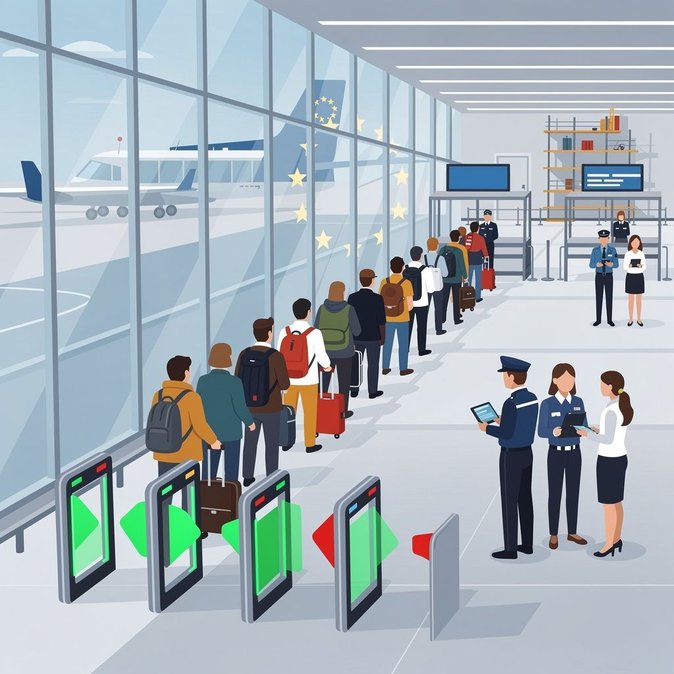
Václav Havel Airport Prague and the Czech Interior Ministry have launched a joint review of emergency measures that were rolled out in recent weeks to cope with long queues caused by the new EU Entry/Exit System (EES). In a press release dated 23 September 2026, the airport confirms that passenger-flow “red teams”, revised corridor layouts and extra police officers have cut average wait times but that further fixes are in the pipeline before the busy autumn break period. EES, fully operational since April, records biometrics of third-country nationals entering and leaving the Schengen Area. While the self-service kiosks speed processing for many travellers, Prague saw a spike in incomplete registrations—especially among families and elderly passengers—leading to bottlenecks at Terminal 1 during September’s peak. Airport chairman Radomír Lašák said the current focus is on allowing pre-registration before departure and on-board briefings so that more passengers arrive with data already captured. Interior Minister Lubomír Metnar, who met airport management this week, pledged extra resources and hinted that temporary staff could be seconded from other police units. Officials are also working with EU agencies on an information campaign explaining EES requirements in multiple languages. For business travellers the turbulence is a warning to budget extra time for arrivals from non-Schengen destinations such as the UK, USA or Gulf hubs. Airlines with tight aircraft-turnaround schedules have asked the airport to share live queue data so they can adjust gate-closing times. Relocation consultants meanwhile advise short-stay assignees to complete kiosk steps in full and keep printed receipts handy in case of system glitches. The review’s conclusions are due in early October. Longer-term, Prague Airport plans a major expansion of Terminal 1 passport control by April 2027, adding both staffed booths and automated e-gates capable of reading biometric passports and EES tokens.