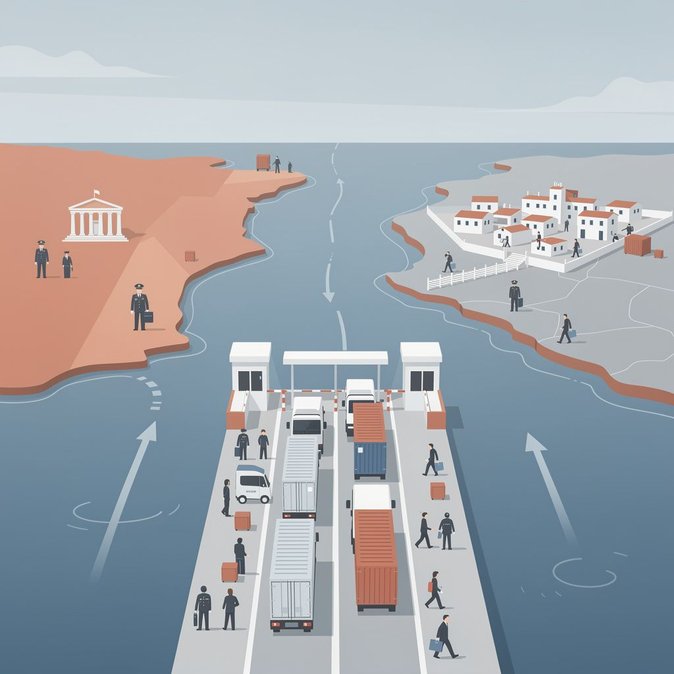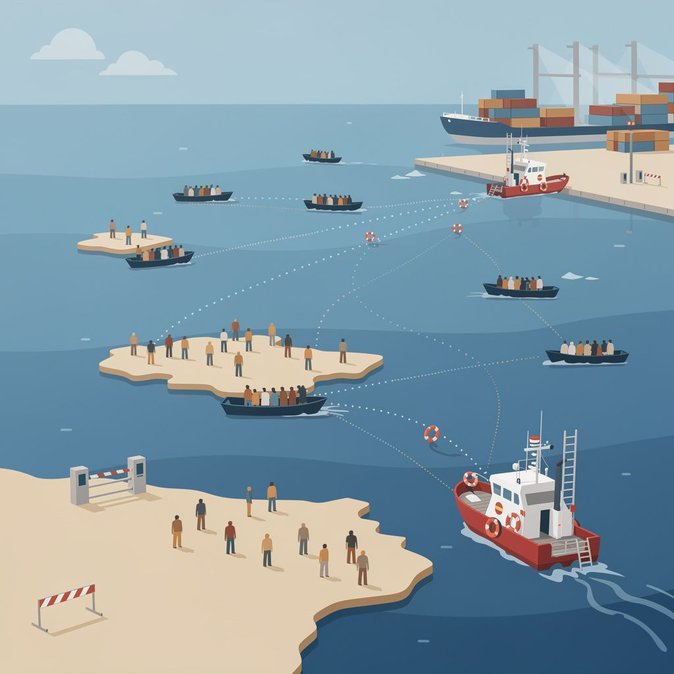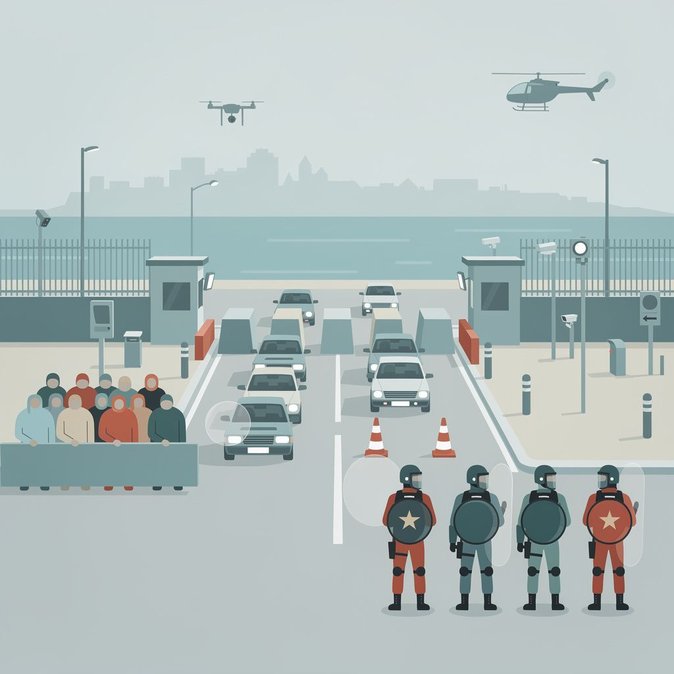
Spanish security forces breathed a cautious sigh of relief on Wednesday after a much-publicised call on social networks for a new mass entry into the enclave of Ceuta failed to materialise. In the early hours of 23 September the Tarajal checkpoint saw normal traffic, while three reserve platoons of the Guardia Civil and 75 officers from the Policía Nacional’s specialised intervention unit patrolled the perimeter shoulder-to-shoulder with Moroccan gendarmes. The reinforced deployment—complete with drones and a helicopter—was ordered by Interior Minister Fernando Grande-Marlaska after intelligence units detected online groups amassing more than 90,000 followers. The mobilisation mirrored the July 30-31 incident that overwhelmed Ceuta with some 7,000 arrivals and forced Madrid to declare a ‘situation of interest for national security’. This time Moroccan authorities erected early checkpoints near Castillejos, stopping would-be migrants long before they reached the fence. Although the night passed quietly, officials warn the threat has merely been postponed. Frontex statistics show that pressure on the Western Mediterranean route has risen 24 % year-on-year, and traffickers increasingly coordinate ‘flash crossings’ around political events—Morocco held parliamentary elections yesterday. Spain’s contingency plan keeps riot units on 72-hour standby and allows the Interior Ministry to re-impose temporary Schengen checks at ports such as Algeciras within six hours. Business travellers to Morocco and logistics firms using the Algeciras-Tangier Med corridor should therefore monitor alerts closely. For employers with expatriates in Ceuta or those dispatching technicians to the enclave’s thriving free-zone, the message is preparedness. Companies are advised to register mobile numbers with Spain’s Civil Protection SMS alert system, brief staff on possible curfews and maintain buffer stock as lorry traffic could be delayed by spontaneous perimeter closures. The episode also underscores how political triggers in North Africa can have immediate operational impact on Spanish territory—and on the EU’s wider mobility landscape.
Source: SUR in English