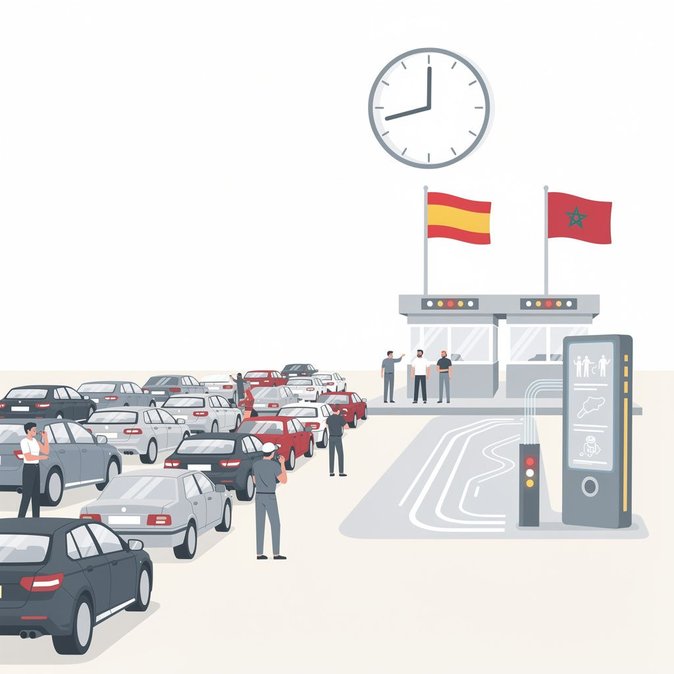
Traffic at the Beni-Enzar border post between Melilla and Morocco eased visibly this Sunday, yet travellers still faced up to 120 minutes of waiting time to enter the North-African kingdom. According to on-site reporting by El Faro de Melilla, the line of vehicles never exceeded two parallel rows, a far cry from the kilometre-long tailbacks seen during the peak of the Operación Paso del Estrecho (OPE) in July and August. Most crossers were Melilla residents spending the weekend with relatives in neighbouring Nador province. Officials attribute the residual delay to slower processing on the Moroccan side, where biometric checks have been tightened since the mass entry events in Ceuta at the end of July. Spanish police describe the situation as calm, with no notable incidents, but advise motorists to keep water and fuel on hand in case processing slows further. For companies that shuttle staff or cargo across the land border, the improvement is welcome but fragile. Fresh-produce exporters using the route to ship citrus fruit into EU markets rely on predictable crossing times to meet supermarket delivery windows. A two-hour buffer still forces many to dispatch refrigerated lorries a day earlier, adding storage costs. Tour operators running day trips from Melilla report last-minute cancellations as travellers opt for the ferry to Almería instead. Last month’s official OPE figures show a record 251,704 passengers and 57,791 vehicles moved through Melilla’s port, up roughly 19 % year-on-year. Authorities are keen to consolidate the smoother flow by expanding electronic pre-clearance lanes before next summer. Until then, mobility managers with personnel transiting Beni-Enzar are advised to schedule crossings outside weekend peaks and monitor local media for ad-hoc closures related to Ceuta-linked security alerts.
Source: El Faro de Melilla