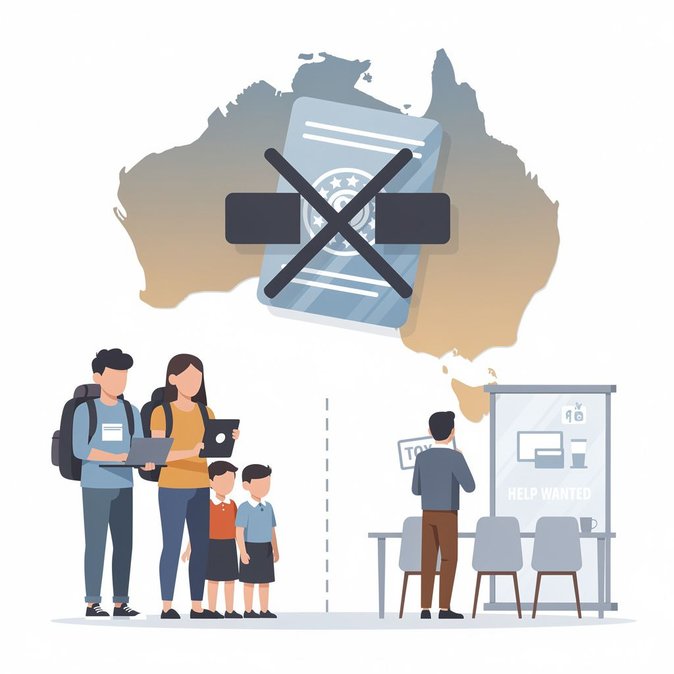
The Albanese Government has unveiled the most sweeping overhaul of Australia’s Student (Subclass 500) visa in a decade, publishing new regulations on 2 October and formally announcing the measures on 5 October. From this week, most temporary visa-holders already inside Australia can no longer lodge a new Student visa on-shore; accompanying family members are restricted to a narrow set of exemptions; and course-transfer rules have been lengthened from six to twelve months. Officials say the goal is to deter ‘visa-hopping’—a practice in which visitors shift from one temporary visa to another to prolong their stay without progressing toward skilled migration. The reform follows a 12-month Home Affairs review that found one in four on-shore Student visa applications were made by people who had already spent more than four years in Australia on other temporary visas. Education Minister Jason Clare argues that tightening the pipeline will protect the reputation of Australia’s AU$48 billion international education sector while freeing up processing resources for genuine students. Industry groups broadly support the integrity push but warn of short-term revenue hits for low-ranking colleges that rely on on-shore enrolments. Practically, the changes mean that backpackers on Working Holiday visas, graduates on Temporary Graduate visas and visitors on Subclass 600 visas must now depart Australia before re-applying as students. Institutions have been advised to update marketing collateral immediately and to audit current offer letters, as prospective enrolees caught mid-application may need to defer their start dates. Employers that use Student visas to fill part-time labour gaps should also plan for a smaller on-shore applicant pool. Migration agents expect a spike in offshore lodgements from high-growth markets such as India, Nepal and the Philippines, potentially increasing assessment times at embassies in those countries. For corporate mobility managers, the biggest takeaway is that employees’ dependent children will no longer have an automatic pathway to a Student visa unless the main applicant is studying a research Masters or PhD in a priority field. HR teams sponsoring staff to Australia should therefore budget for higher schooling costs or consider alternative visa classes, such as the Temporary Skill Shortage (TSS) visa, that allow dependants to attend public schools under state-based fee rules. Home Affairs says it will monitor the impact over the next six months and has flagged the release of a new ‘Student Transfer’ stream in early 2027 to give high-performing graduates a faster transition to skilled visas. Until then, companies and education providers should expect closer scrutiny of financial capacity evidence and higher refusal rates for low-risk markets formerly processed under streamlined assessment.