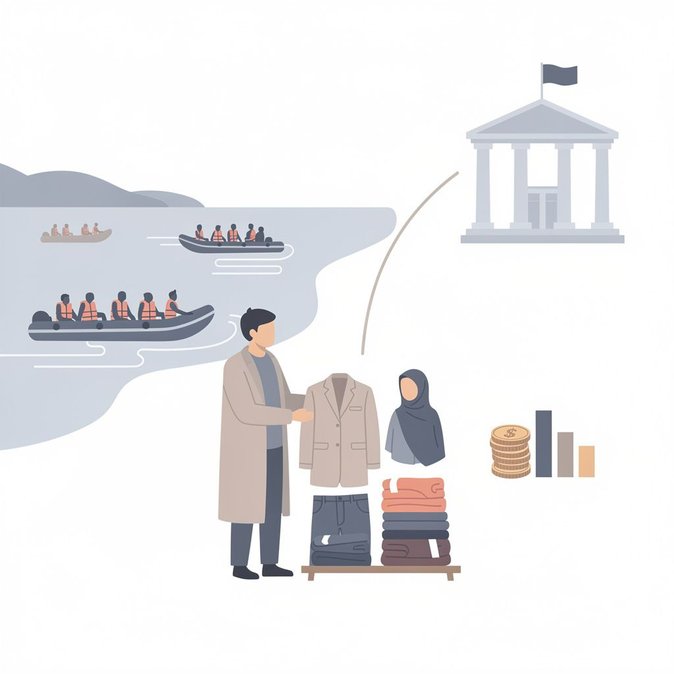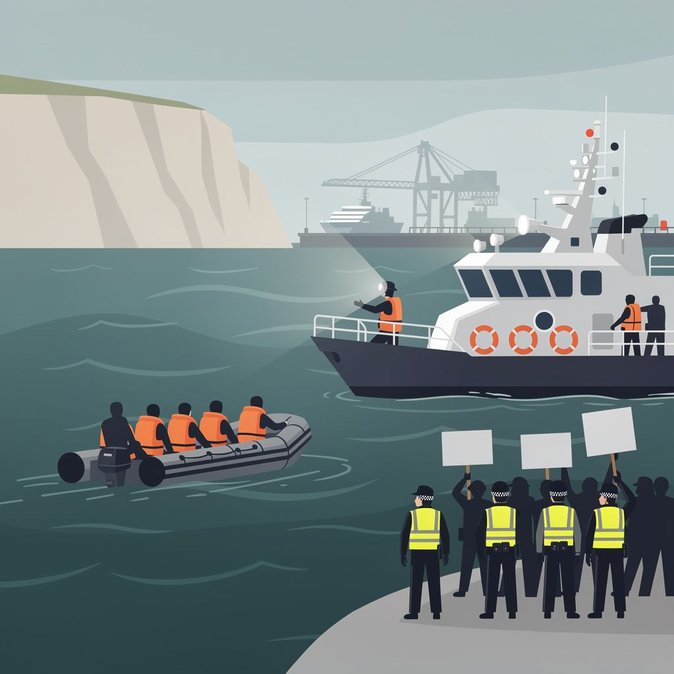
Britain’s small-boat crisis took a deadly turn in the early hours of 5 October when French rescue services confirmed that two men died attempting to cross the Channel in a rigid-hulled dinghy. A further 149 people were rescued from a second overcrowded vessel and transferred to Royal National Lifeboat Institution (RNLI) boats before being landed at Haslar Marina in Gosport, Hampshire. The Home Office’s Border Security Command activated emergency disembarkation plans, bussing the arrivals to short-term holding facilities in Kent for biometric enrolment and asylum screening. While officials praised the Franco-British co-ordination that averted a larger tragedy, the incident underscores the continuing lure of the southern English coast despite a 43 % fall in crossings compared with 2025. Tensions on land were equally fraught. Around 350 anti-migrant demonstrators—some linked to far-right groups—clashed with Hampshire police, throwing flares and scuffling with officers. Twelve people were arrested on suspicion of violent disorder and racially aggravated offences. Local authorities accused agitators of spreading online disinformation that Gosport was becoming a permanent reception site; in reality, the port is used only as a contingency when Dover is congested. For mobility managers the unrest is a reminder that community opposition to migrant reception can escalate quickly, disrupting transport links and heightening duty-of-care risks for staff assigned to nearby naval and defence projects. Companies should monitor protest intelligence and ensure travellers carry appropriate identification, as police enforced emergency powers banning face coverings and restricting movement around the marina. Politically, the deaths add pressure on Home Secretary Shabana Mahmood, whose new Afghan-and-Palestinian resettlement corridors (see separate story) aim to prove that “safe and legal routes” can sap demand for smugglers. Opposition MPs argue that without faster asylum decision-making and expanded legal labour pathways, crossings—and the community flashpoints they create—will persist.
Source: The Guardian