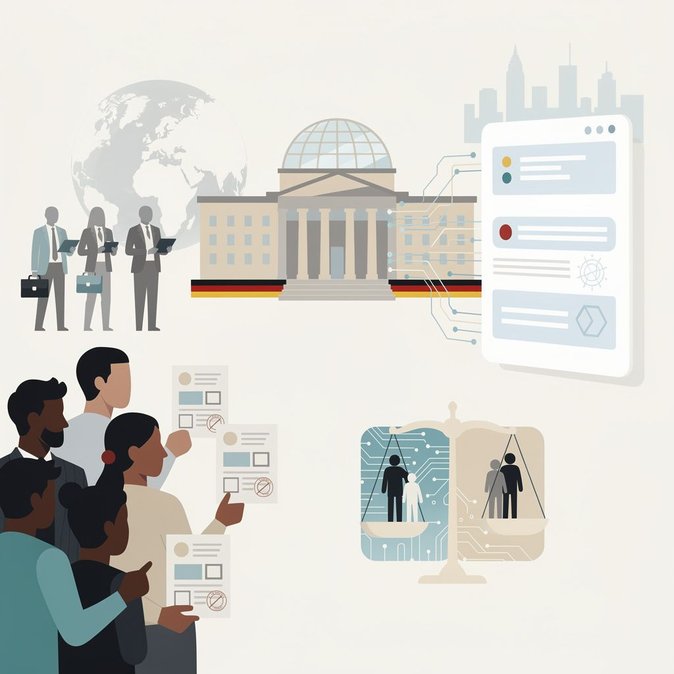
Germany’s public Lobbyregister logged a flurry of new submissions on 7 October 2026 as trade associations, legal NGOs and tech consultancies filed position papers on the draft “KI-Migrationsverwaltungsgesetz” (KIMVG). The bill, tabled by the Interior Ministry, would introduce machine-learning tools into visa, asylum and residence-permit workflows. Stakeholders from the Confederation of German Employers (BDA) to the Verband Binationaler Familien warn that algorithmic decision-making could unintentionally disadvantage non-standard career paths or complex family constellations—key demographics in global talent mobility. They urge lawmakers to embed human-review safeguards and transparent scorecards before automated refusals are issued. Meanwhile, the German Start-up Association supports the bill, arguing that faster, AI-assisted document verification could cut Blue Card processing times from an average of nine to three weeks, bolstering Germany’s attractiveness to tech founders. The group calls for a 48-hour ‘fast lane’ for critical skills in AI, robotics and quantum engineering. The Bundestag’s first reading is scheduled for 8 October. If passed, the legislation would mandate pilot projects in Berlin, Munich and Hamburg by mid-2027 and set nationwide standards by 2028. Data protection authorities, however, caution that the bill must align with the EU Artificial Intelligence Act, still under trilogue negotiation in Brussels. For multinational employers, the debate signals both opportunity and risk: streamlined processing could accelerate onboarding, but opaque algorithms could complicate compliance audits. Legal counsel recommend mapping out escalation channels now, in case AI-generated refusals need to be challenged once the system goes live.