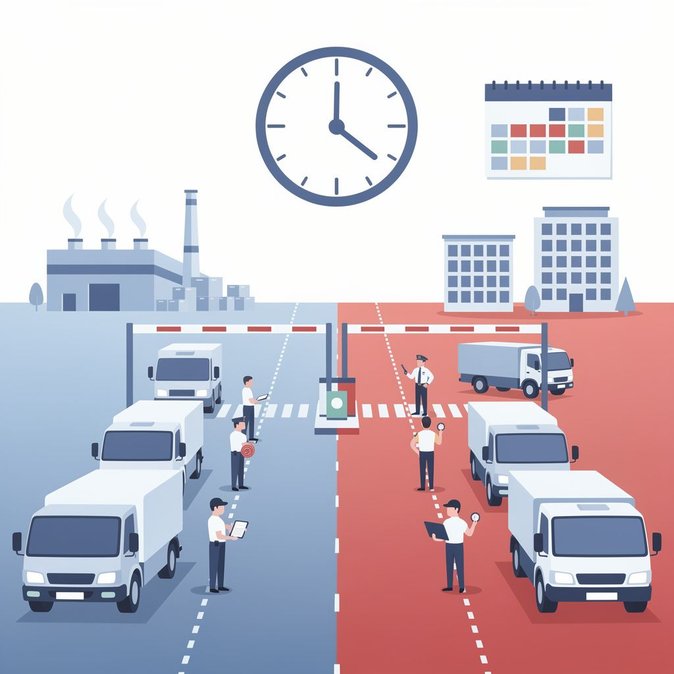
Regional broadcaster RBB reported on Sunday evening that Poland has extended its own checks on the German side of the common frontier until at least 31 March 2027. Warsaw introduced mirror-controls in late 2024 after Berlin stepped up inspections to curb people smuggling. Monique Zweig, mobility policy lead at the East Brandenburg Chamber of Commerce and Industry (IHK), told RBB that exporters are already seeing average trucking costs rise by €180 per round trip because of waiting times and detours. Small manufacturers that rely on “just-in-sequence” deliveries from Polish suppliers are now building buffer stock or shifting to rail freight via Küstrin station, where controls are lighter. For commuters, the joint German-Polish police patrols mean passports must be carried even when crossing with an EU national ID card. The Brandenburg state government is negotiating a fast-track lane for cross-border workers during peak hours, but no date has been set. HR departments with staff living in Słubice and working in Frankfurt-Oder should consider flexible start times until the situation stabilises. The prolonged Polish controls add a further layer of complexity for multinational companies operating in both countries. Posted-worker notifications must list the precise border crossing and anticipated arrival time; inaccuracies have resulted in fines of up to PLN 3,000. Transport insurers are likewise revising force-majeure clauses to reflect the higher likelihood of delivery delays. Although both Berlin and Warsaw insist that the measures are temporary, analysts note that the dual-control regime has survived two EU Council reviews and may well become semi-permanent. Companies are therefore urged to integrate the extra lead-time into 2027 supply-chain planning and to brief drivers on documentary requirements.
Source: RBB Brandenburg Aktuell