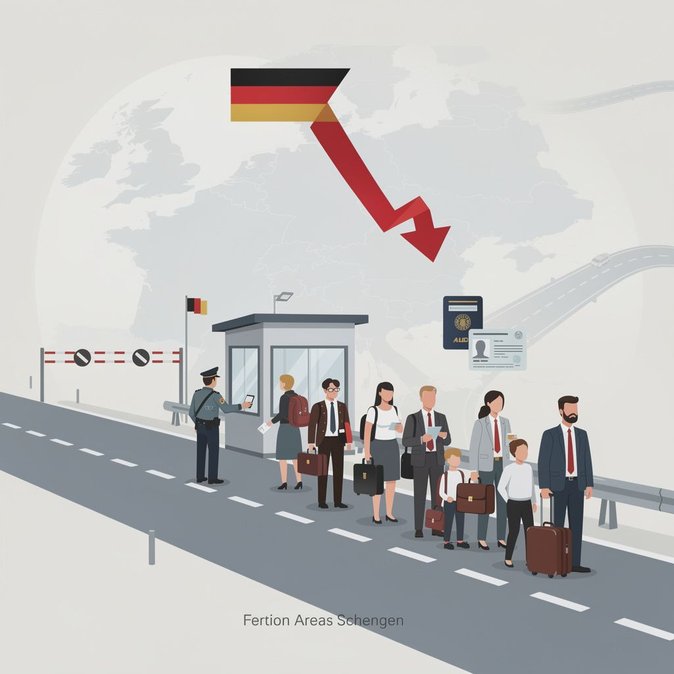
The Federal Police Headquarters (Bundespolizeipräsidium) in Potsdam published its monthly statistics for September 2026 this morning. According to the figures, officers registered 5,770 unauthorised entries at Germany’s land, air and sea borders—down from 8,030 in August. The sharpest decline was recorded at the eastern land frontier with Poland (-39 %), followed by the Czech and Austrian borders. Berlin attributes the improvement to the “temporary” internal border controls that were re-introduced on 16 September 2024 and have been prolonged every six months since. Checks are now carried out on all nine internal frontiers as well as on key international rail routes. Corporate mobility managers had initially criticised the measure for slowing down cross-border commuting and supply-chain traffic, but the Interior Ministry argues that processing times have stabilised at under two minutes per vehicle thanks to additional e-gates and extra staffing. From a compliance perspective, the statistics matter because they influence risk-based screening at airports and inform the Federal Foreign Office’s visa-adjudication priorities. The lower inflow eases pressure on Germany’s asylum system and could accelerate appointment availability for skilled-worker visas in neighbouring consulates. Companies that routinely send technicians across the Polish or Czech border are nevertheless advised to schedule 20–30 minutes extra travel time and to carry original passports plus assignment letters. The report also signals that Germany will almost certainly renew border controls again in mid-March 2027. EU law allows such internal checks only as a last resort; the Commission is scrutinising proportionality, but a formal infringement procedure appears unlikely while migration numbers remain politically sensitive. Businesses should therefore prepare for another year of on-the-spot ID checks, particularly for posted workers driving commercial vehicles. In practical terms, HR teams should update travel policies to remind employees that national ID cards are not sufficient for third-country nationals transiting Schengen by car. Car-leasing firms are already offering glove-box document kits that include vehicle registration, A1 certificates and EU Posted-Worker notifications to minimise delays during inspections.