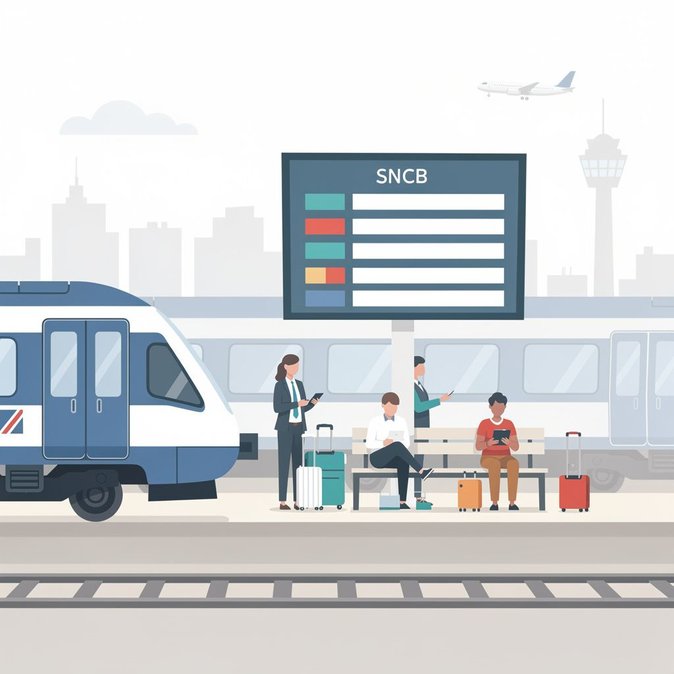
Belgium awoke on Friday, 9 October 2026, to the most disruptive nationwide strike since before the pandemic. The socialist public-service unions CGSP/ACOD and their Flemish counterparts stopped work for 24 hours to protest government budget cuts. Their action simultaneously hit every major mode of transport and left tens of thousands of commuters and business travellers scrambling for alternatives. In Brussels, the STIB-MIVB urban network announced that only three metro lines would run at 30-minute intervals, while most tram and bus routes were suspended entirely. The operator urged passengers to work from home or cycle, and published an emergency map showing the handful of services that would remain in operation. National rail company SNCB/NMBS introduced a “strike timetable”, cutting roughly half of inter-city frequencies and warning that knock-on effects would continue through Monday, 12 October. Crowds quickly formed on the reduced services that did operate, and police were deployed at Brussels-Central and Antwerpen-Centraal to manage platform access. Aviation was not spared. Brussels Airport Company told its airline partners to expect staffing shortages at ground-handler Alyzia and security screening points. By midday it recorded more than 140 flight cancellations—about 20 % of the day’s movements—including routes operated by Brussels Airlines, United, American and Ryanair. Several carriers issued change-fee waivers for passengers due to fly on 9–10 October, allowing free re-booking through 16 October. Cargo operations also slowed as ramp staff joined picket lines. Regional airports at Charleroi and Liège remained open but faced staffing gaps of their own. For globally mobile employees, the practical impact is immediate. International assignees attempting to renew residence permits in person at municipal offices found counters closed. Companies relocating staff into Belgium were forced to re-route arrivals through Paris or Amsterdam, then arrange ground transfers. Mobility managers are advising travellers to build in at least 48 hours of slack for onward connections and to carry digital copies of residence and work authorisations in case physical cards cannot be collected on time. The strike highlights Belgium’s continuing labour-relations volatility—an important background risk for business-travel planners. Unions have already filed notice for follow-up actions on 12 October, and Brussels Airport warns that flight schedules could remain fluid into next week. Firms with critical travel or assignment start-dates are being urged to monitor operator websites and government channels in real time and consider remote-work contingencies.