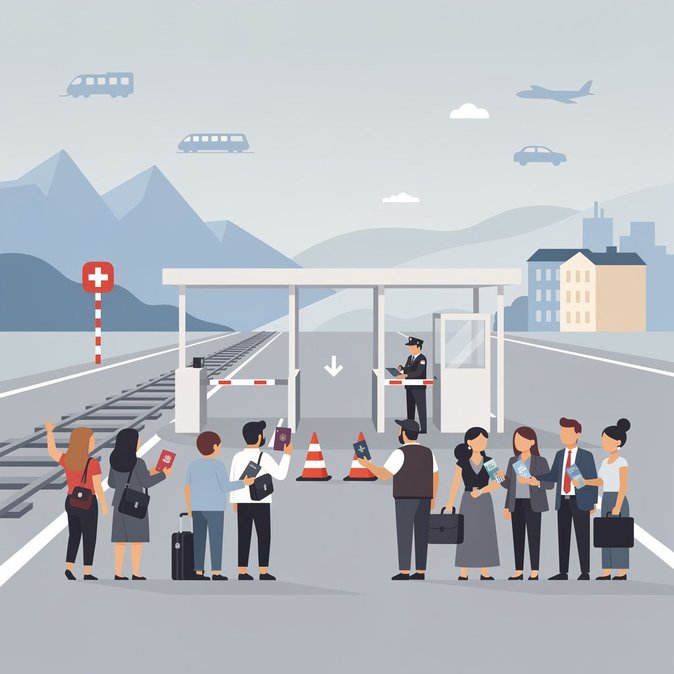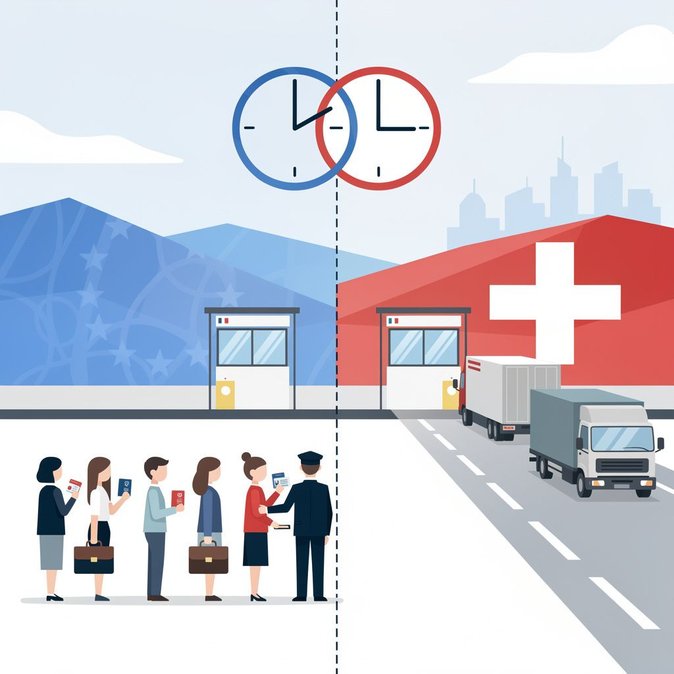
A notification published by the European Commission’s Schengen Secretariat on 11 October 2026 confirms that France will re-introduce controls on all internal borders – including its land frontier with Switzerland – from 1 November 2026 until 30 April 2027. Paris cites persistent jihadist threats, rising antisemitic violence and organised migrant-smuggling networks as grounds for triggering Article 25 of the Schengen Borders Code. For the 180,000 daily cross-border commuters who live in France’s Grand Est or Auvergne-Rhône-Alpes regions and work in Geneva, Basel or Lausanne, the measure could lengthen rush-hour queues and disrupt just-in-time manufacturing supply chains. Swiss logistics groups say every extra minute at the Franco-Swiss frontier costs exporters roughly CHF 50,000 in lost productivity during peak periods. Airports will also feel the impact. Swiss carriers operating from Geneva and Zurich to French destinations must prepare for spot checks on crews and passengers, and duty-free operators expect lower impulse spending if travellers face longer formalities. Meanwhile, multinational companies running short-term assignment programmes between their Swiss and French offices should review posted-worker notifications and allow extra travel time for technicians and consultants. Although the controls are temporary, the six-month duration – France’s third consecutive extension – renews debate in Bern over whether Switzerland should deploy additional customs officers and digital-lane technology. The Federal Customs and Border Security Office (BAZG) said it is analysing traffic-modelling data so that freight-forwarders can reserve ‘green lanes’ for perishable goods, while HR teams are urged to brief cross-border staff on new ID-check hotspots. Under Schengen rules, France must report monthly to the Commission and consult neighbours; Swiss authorities confirmed they will participate in joint evaluation missions in December and February to assess necessity and proportionality.