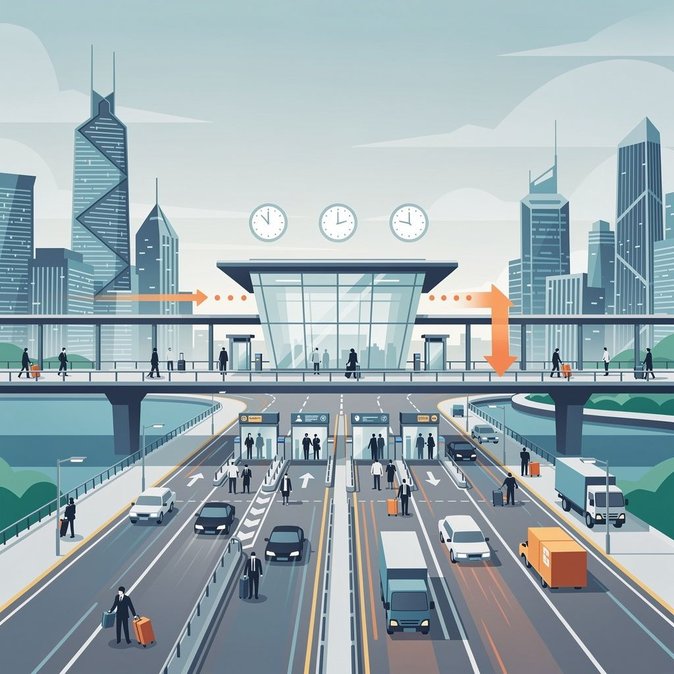
Speaking to reporters after the opening ceremony of Huanggang Port on 11 October, Secretary for Security Tang Ping-keung set out final preparations for the new 24-hour land boundary. More than 1,200 immigration, customs and police officers will be on duty in the first 48 hours, supported by 240 automated e-channels capable of handling 9,000 passengers per hour. Additional mobile X-ray vans and drug-detection dogs have been deployed to counter smuggling risks as traffic ramps up. Tang said authorities ran four full-dress rehearsals in September simulating typhoon evacuations, IT outages and mass tour-group surges. The drills led to tweaks such as bilingual way-finding, dedicated lanes for wheelchair users and real-time wait-time dashboards viewable via the HK-eMobility app. A new joint command centre connects live CCTV and AI crowd-density analytics to both Hong Kong and Shenzhen control rooms. The security chief emphasised that data-sharing safeguards comply with Hong Kong’s Personal Data (Privacy) Ordinance; biometric templates captured at Huanggang will be stored separately on Hong Kong and Mainland servers with encryption keys held by their respective jurisdictions. “There is no cross-jurisdictional access to raw data,” Tang said. Transport operators welcomed the readiness measures. KMB confirmed it will start an overnight B5X bus linking Huanggang to West Kowloon Station every 15 minutes, while ride-hailing platform GogoVan said it expects a 20 % spike in late-night cross-boundary van bookings once the port opens. Labour-market experts, however, urged vigilance against illegal employment. The Construction Industry Council fears easier movement could attract unlicensed Mainland workers unless site checks intensify. The Security Bureau responded that joint inspection teams would conduct random spot checks at exit lanes during the first month of operation.
Source: RTHK