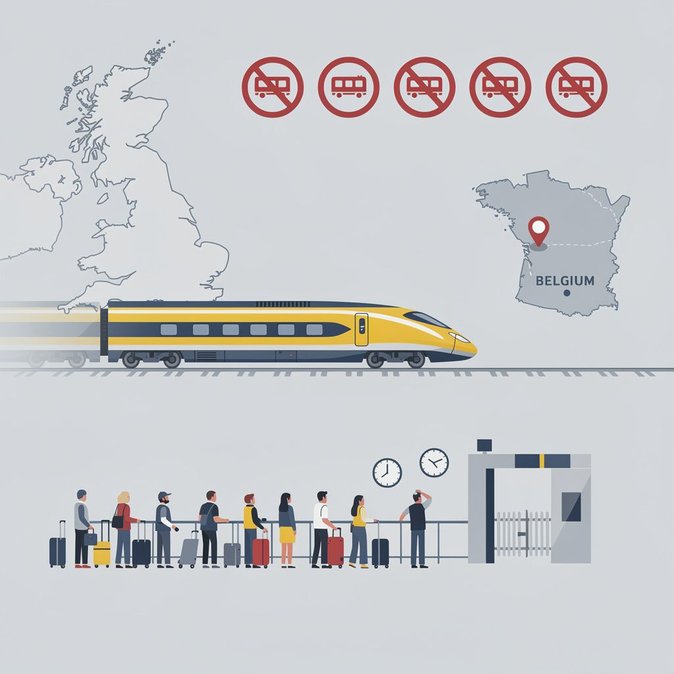
Belgium woke up to widespread disruption on 12 October as the ACOD public-sector union led a general strike against planned federal budget cuts. Rail operator SNCB ran just 70 % of InterCity trains and half of local services, while regional operators De Lijn and TEC cancelled around 40 % of buses and trams. Brussels-area metro services also saw intermittent closures. The walk-out spilled well beyond transport. Schools in the Flemish GO! network were forced to curtail classes, public broadcasters VRT and RTBF aired reduced schedules, and postal deliveries slowed nationwide. Several municipalities warned residents that rubbish collection could take days to normalise. Although Brussels Airport’s flight schedule remained intact, the scarcity of trains and buses complicated access for travellers and staff. Eurostar cited congestion at Brussels-Midi for multiple service delays (see separate story). Logistic companies reported minor delays at the Port of Antwerp as truck drivers faced detours around picket lines. For global-mobility and HR teams the strike underscores the need for flexible work policies and alternative routing for inbound assignees. Some companies activated remote-work protocols to avoid lost productivity, while others booked hotel rooms near worksites for critical staff. Union leaders say more action could follow if the government proceeds with pension and headcount reductions. Employers with Belgian operations should therefore incorporate potential strike days into risk calendars and communicate contingency options to travelling employees well in advance.
Source: Anadolu Agency